
< BACK TO ARTICLES 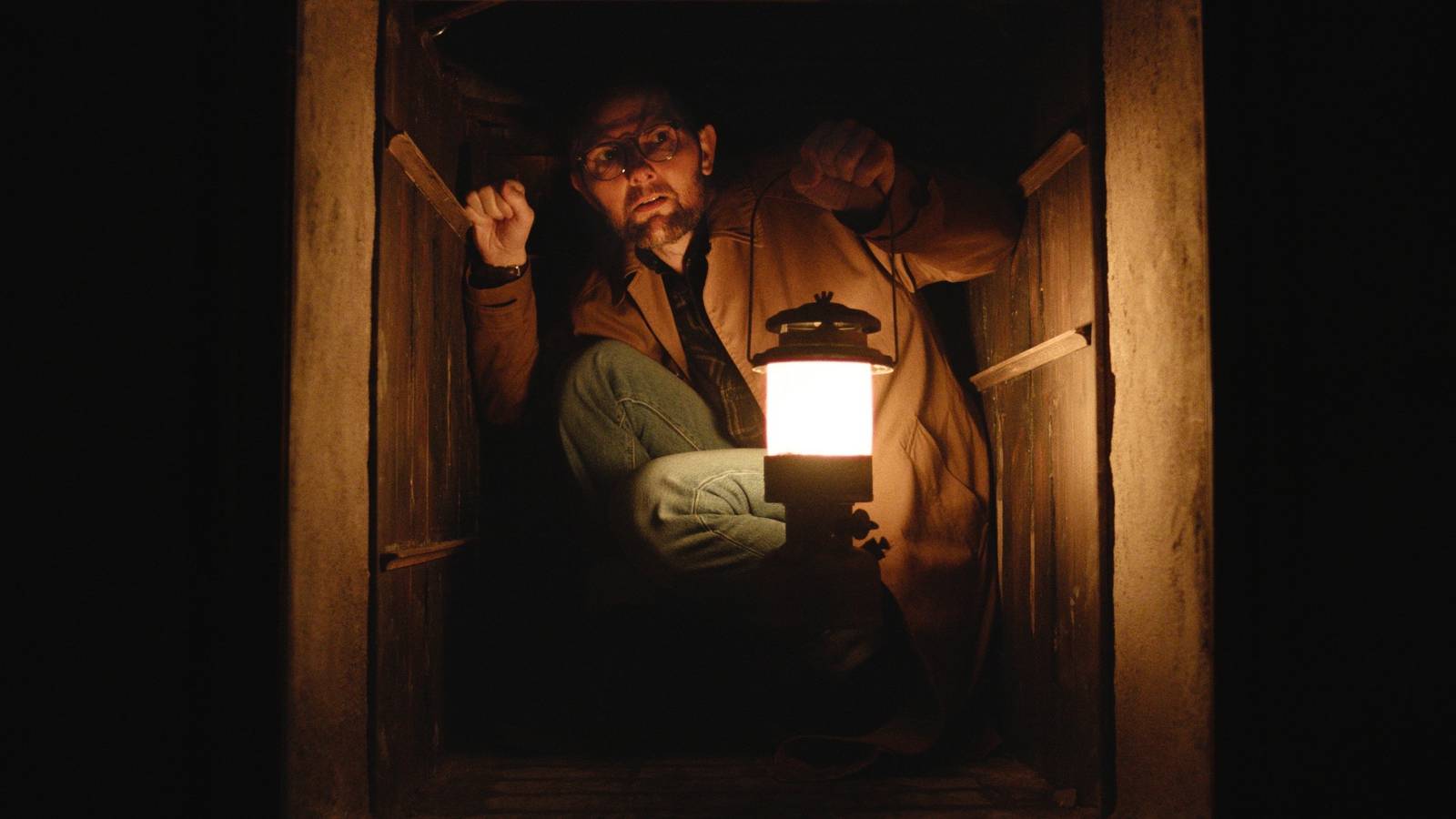
Damian McCarthy's Hokum has been 10 years in the making
April 30, 2026 1 views
EntertainmentTravelGamingReal EstateHome Garden
At the start of the 2020s, nobody had heard of Damian McCarthy. Then came a string of hits from the Irish horror filmmaker. First was Caveat, a microbudget film about a drifter who takes a job looking after a psychologically disturbed woman in an isolated mansion. McCarthy followed that up with Oddity, a 2024 Shudder exclusive about a blind woman who uses her psychic powers to get revenge on the man she suspects of murdering her sister. Now, he's taking his biggest swing yet with Hokum, starring Adam Scott as a writer who travels to a remote Irish hotel that may or may not be haunted by an evil witch. (Spoiler alert: It is, and she's terrifying.)
Like McCarthy’s previous films, Hokum takes place in Ireland and features an all-Irish cast (with the sole exception of Scott's character, Ohm Bauman). Also like his previous films, it relies heavily on a single physical location that shapes the story in multiple ways. (Oddity takes place in an old country house; Hokum upgrades to a grand, creaky hotel.) And like his previous films, Hokum is quite scary.
Image: Neon
When I asked McCarthy why his movies are so effectively spooky, he attributed it to a deep familiarity with the horror genre, which comes from weekly scary movie nights, where he and his brother watch whatever's new or revisit an old classic. That said, he also has some detailed theories about how to craft the perfect jump scare, which requires a mix of planning, restraint, and instinct. "A lot of it is just gut feeling," he says. Polygon spoke to McCarthy about the origins of Hokum and its monstrous witch, how a movie’s physical location can change its story, and the secret to scaring the bejesus out of an audience with a well-earned jump scare. This interview has been edited for brevity and clarity.
Polygon: Where did the idea for Hokum come from? How long have you been working on it? Damian McCarthy: It probably goes back 10 years or so. Just the original idea of a guy trapped in this haunted honeymoon suite, trying to escape. That was the very bare bones of the idea. Over the years, I kept adding in little things, kind of picking at it. I might've done a draft or two of the script, and it was OK. Once Oddity was done and it looked like I'd get to make something else, I dug out that script to see if I could make that work. Every film I make informs what I want to do next. Oddity felt like this ensemble movie, non-linear structure, a little bit strange. So I wanted to make something that felt a little more commercial, or straight A to B, like a guy locked in a room, and he's got to survive the night and make it to dawn and escape. How did Adam Scott wind up in this movie? Did you always plan to cast a Hollywood star in the lead role? My hope was to work with an Irish cast, but then bring in somebody who would be well-known internationally. I was watching Severance at the time, and I was like, Oh my God. He's so good in this. I mean, he's good in everything, but he just seems very troubled and internal in it, with a bit of a darkness to him. Meanwhile, lucky for me, he had seen Oddity and he liked it and he was just curious: So the guy who made Oddity, what's he doing? So the script went to him, and from there, we just started talking.
Image: Neon
His character in the movie is kind of a jerk. Was that always in the script, or did it evolve later on? No, it was very much in the script. I even said to him, "I hope you don't mind playing it, because the guy is just not likable at all." It would've been a deal-breaker if any actor had said, "I don't really like the way he's so cruel and he's a bit of a bully. I think we need to make it nicer." But Adam Scott goes, "I like the fact that this guy's got to kind of push everybody away, including the audience, and then see if people can start to empathize with him by the end of the movie." That's not easy. In any film, especially horror, if you're not connecting with the characters, you really don't care if they get killed. You're kind of willing for something bad to happen to them. You go, "I don't care who lives or dies in this movie." Adam did a good job of balancing that. I can see some possible similarities between you and the main character. You're both artists who tell very bleak stories. The character is finishing a trilogy, and this is your third feature film. Did you base him on yourself in any way? I mean, he is a writer, and he's working on this stuff. And I think even during the writing, because I was in post-production on Oddity, I was living in a hotel for six or seven months. So I was spending a lot of time alone just at night, just coming home from the edit or whatever, writing all night. So the isolation of it is definitely something I could relate to. And then I'd home and it takes a minute to kind of feel social again, but never to the extent that he is, where he's cruel and mean. But I guess the isolation of it, I could relate to.
Image: Neon
There's some very fun, spooky folklore in this movie about an old witch who drags misbehaving children to Hell. Was that based on an old fairytale, or did you make it all up? It's very much invented. I think there's something kind of universal about a witch. Every country has their own take on the witch. The idea of her dragging sinners off to Hell, there's kind of a Catholic feel to that. Growing up in Ireland, that's where sinners are going to go. But really, it was just me wanting to do a witch horror film. What's always scared me about witches is, they're always having a really good time. They never seem to be under pressure. They find everything funny. They're easy to make laugh. Their motives are very hard to understand. And all that ambiguity and weirdness is creepy.
What's always scared me about witches is, they're always having a really good time.
The witch in Hokum feels more like a creature than a human. She barely speaks and she crawls around on all fours. Did you ever consider making her less monstrous? She's very much unknowable. I just thought that would be more frightening. I don't know what her motive is. I don't really know what she's up to. If the script was structured differently, you would almost keep her a secret. And then at the midpoint, or somewhere breaking into the third act, the hotel owner would suddenly come along and explain everything that she wants and everything she's up to. I'm sure in earlier drafts, the script was a little bit more complicated, but I try to lean into a very simple creature feature. “She's a monster. Watch out!” Where was Hokum filmed? Did you find an old hotel to shoot it in? It's a mix — there’s a private residence that we art-directed to turn into a hotel. Then in the West Cork Film Studios, in the southwest of Ireland, we built the elevator, some of the hallways, the honeymoon suite. The honeymoon suite was sealed up. There was one secret door at the back, in the bedroom. We'd all come in through that, you'd close it up, and you're in there for the day, in darkness. So I imagine for Adam or for the actors, it was quite interesting. The basement was a really beautiful location in West Cork. It's an old castle, Castle Freke.
Image: Neon
Hokum and Oddity both make really good use of the buildings they take place in. How does the location where you're shooting inform the script and the story? In the three features I've made, and even all my short films, the location is everything. If the location doesn't work, the film is going to fall apart quite quickly. I write the script not really knowing what it's going to look like. But then once I get into storyboarding, it's very much about, "OK, are we building it or are we finding it?" And that will change the script. I'll find an interesting window or a door or the layout of a hallway and go, "Oh yeah, okay. I can change this scary scene now to suit this so much better."
I watch a lot of horror movies, but yours really scare me. What's the secret to a good jump scare? It's probably if the threat is real. If you put in a silly jump scare early in a movie, you lose the audience. Whereas if you can establish that yes, there is something to be afraid of, but we don't know where it is… So the audience knows. It doesn't really matter if the character knows it or not, but it kind of helps if they do.
Take off a couple of frames, suddenly it works.
If a character has to go explore a basement, you need to signal to the audience, "OK, something's going to happen, so be on your guard." Then it's just a matter of when — trying to stretch that out. When it gets to that point where it should happen now, either try to hold or have misdirection. With horror films, you're trying to predict when that scare is coming. If somebody's exploring a dark basement or they're about to look under the bed to see what's there, you think, "Oh, OK. They're going to look under the bed. There's going to be nothing there, but they're going to lean up, and then it's going to be behind them." But if you guess correctly, it's so disappointing. So I try to take what an audience expects and use it against them. That just comes from watching tons and tons of horror movies. A lot of it is just gut feeling. When I get into the edit, sometimes it can be frames. Take off a couple of frames, suddenly it works. All your movies take place in Ireland. Do you think something about that setting lends itself to horror? It's funny, because with Hokum, the idea that Adam's character is coming from the U.S. to Ireland — which is a very welcoming, lovely place, but it's still foreign. It's still a strange old country. So I tried to see it through the eyes of an outsider: What would it be like to go to a real isolated, rural part of the country where people are talking about ghosts and witches and all these things? It's the loneliness of it. There's nowhere to go for help. That's what I tried to lean into with telling this story through an American character's eyes. Hokum opens in theaters on May 1.
Interview
Interview
Movies
Follow
Followed
Like
Share
Facebook
X
WhatsApp
Threads
Bluesky
LinkedIn
Reddit
Flipboard
Copy link
Email
Close
Original source
Read original article on Polygon.com