
< BACK TO ARTICLES 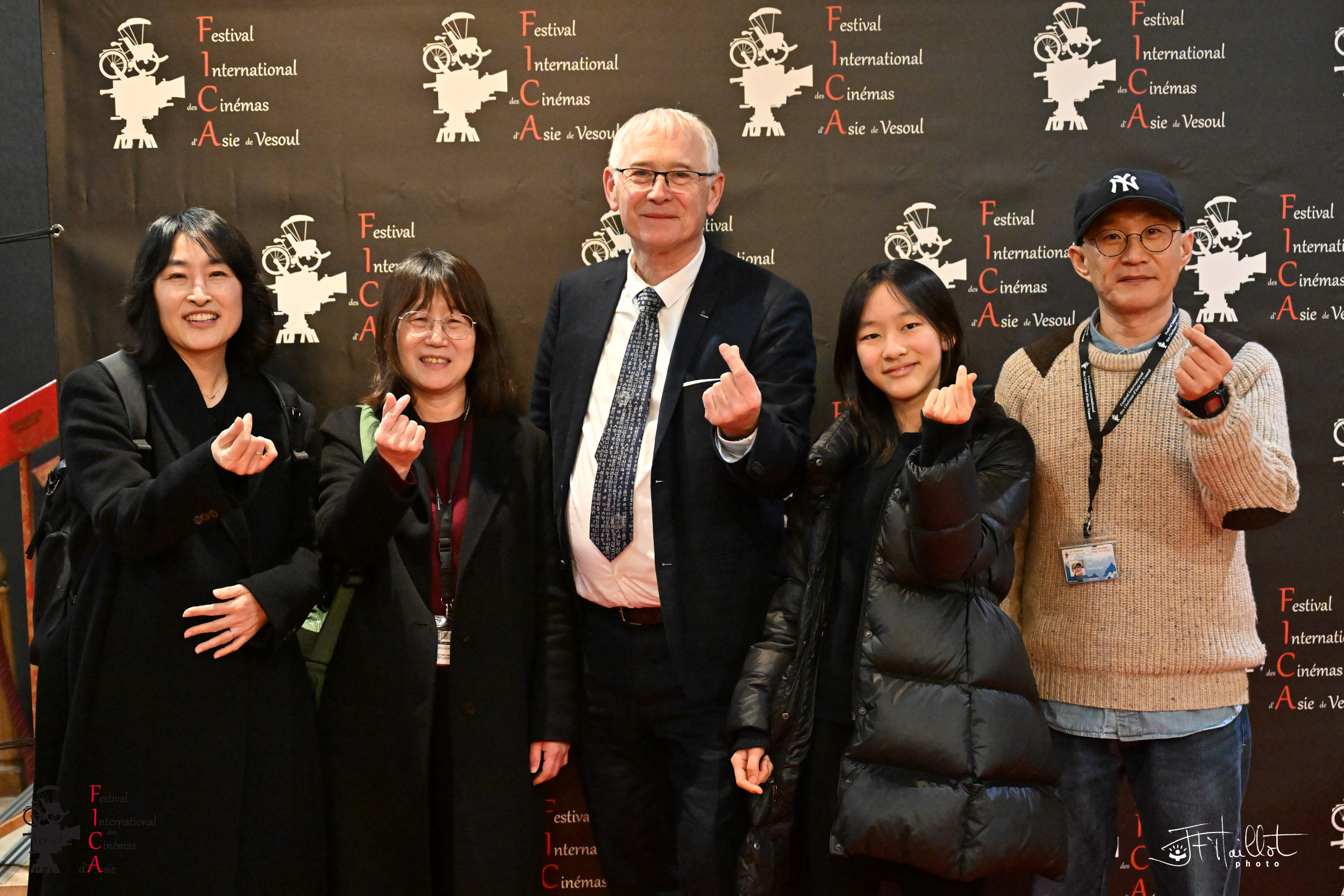
FICA Celebrates 140 Years of Diplomatic Relations Between Korea and France
March 2, 2026 17 views
EntertainmentLifestyleArtsCriminal Justice
1 – How many South Korean films are being screened this year (across all sections)?
Jean-Marc Thérouanne (JMT): This year, we are presenting eight Korean films at the 32nd Vesoul International Festival of Asian Cinemas:
Three in the Fiction and Documentary Competition:
Beautiful Dreamer by Lee Kwang-kuk (International Premiere)
My Old Me – Haemong-Yeohaeng by Cherin Lee (World Premiere)
Welcome Home Freckles by Park Huiju (French Premiere)
Three in the thematic section “Mysteries and Opium Balls”:
Burning (Beoning) by Lee Chang-dong
Decision to Leave (Heojil Kyolshim) by Park Chan-wook
The Spy Gone North (Gongjak) by Yoon Jong-bin
Two in the Young Audience section:
Put Out the Fir Tree by Jeon Seung-bae (animated feature)
My Child by Kim Hyun-joo (animated feature)
2 – Among these films, how many are world, international, European, or French premieres?
JMT: One world premiere, one international premiere, and one French premiere.
3 – How many Korean filmmakers (directors, producers, actors) are invited this year?
JMT: To properly celebrate the 140th anniversary of official relations between France and Korea, we have invited four prominent figures from Korean cinema:
Ms. Shin Su-won, an acclaimed director (Pluto, Madonna, The Mutation, etc.), invited as a member of the International Jury.
Ms. Park Sunyoung, programmer of Asian cinema at the prestigious Busan International Film Festival — often described as “the Cannes of Asia” — invited as President of the Marc Haaz Jury.
Mr. Lee Kwang-kuk, a director whose career we have supported for many years, invited to present in international premiere, in the feature fiction competition, his film Beautiful Dreamer.
Ms. Cherin Lee, invited to present in world premiere, in the documentary competition, her film My Old Me – Haemong-Yeohaeng.
Shin Su-won, Cherin Lee, Park Sunyoung, Jean-Marc Thérouanne (copyright JFMaillot)
4 – How has the presence of South Korean cinema evolved in your programming since the festival’s beginnings?
JMT: Since the creation of the Vesoul International Film Festival of Asian Cinemas, we have screened 140 Korean films. The festival began modestly before reaching its cruising speed of around 90 films per edition, with some fifty invited guests and seven juries (International, NETPAC, Critics, Friends of the Guimet National Museum of Asian Arts in Paris, Marc Haaz Jury, High School Jury, and Youth Jury).
From the very first edition in 1995, we showcased a Korean film as the closing film — To The Starry Island by Park Kwang-su — to highlight the importance of a cinema that was just emerging on the international stage and beginning (modestly) to be distributed in France.
The Korean Cultural Center played an important role in supporting one of the first courageous distributors of Korean films in France, Jacques Maréchal of Les Grands Films Classiques. Ten Korean films were distributed in France at that time: five by Lee Doo-yong (the first Korean director selected in Official Competition at Cannes with Spinning, the Tales of Cruelty Towards Women), four by Im Kwon-taek, and one by Bae Chang-ho.
Upon seeing these films, we immediately grasped the importance of this cinematography. It felt like discovering an entire world of beauty and formal mastery.
Every year, we have screened Korean films. In 1997, during the third edition, we invited our first Korean guest, the legendary actor Sin Song-il — presented at the time as the “Korean Alain Delon.” He starred in The Village of Kilsottum by Im Kwon-taek, the opening film of that edition. The mayor of Vesoul awarded him the city’s Medal of Honor.
Our first Korean retrospective was a tribute to Im Kwon-taek (1999). The second, in 2005, honored Lee Doo-yong in his presence.
In 2006, we participated in the celebration of 120 years of Franco-Korean friendship by honoring director Hur Jin-ho.
In 2011, we organized a major retrospective of thirty key films in Korean cinema history, spanning the pre-Korean War period to 2011, inviting numerous Korean film professionals, including director Lee Myung-se (President of the International Jury), Jeon Soo-il, Park Chur-woong, Kim Dong-ho (founding father of the Busan International Film Festival), Kim Hye-shin, and others.
In 2016, to commemorate 130 years of Franco-Korean friendship, we organized a retrospective of around twenty films on the theme “Korea: Literature and Cinema” (1949–2016), including the powerful White Badge by Jeong Ji-young.
Each year, Korean films are represented in both the feature fiction and documentary competitions, as well as in thematic sections. All genres are explored.
5 – Since when have you observed a significant increase in South Korean films in Vesoul?
JMT: For 32 years, we have paid close attention to Korean auteur cinema. While we sometimes present more commercial, formatted films, what interests us above all is cinema in which one can feel the director’s distinctive artistic signature.
6 – How does local and international audience response to Korean films compare with other Asian cinemas?
JMT : Younger generations are familiar with Korean cinema, especially the films of Park Chan-wook — future President of the Jury at the 79th Cannes Film Festival in 2026 — as well as Bong Joon-ho, Kim Seong-hun, Kim Jee-woon, and others. Today’s French youth are strongly drawn to Korean culture — cinematically, musically, and gastronomically. Vesoul is no exception.
7 – Have certain Korean films performed particularly well with Vesoul audiences?
JMT: Films by Lee Chang-dong, Park Chan-wook, Bong Joon-ho, Im Kwon-taek, Hong Sang-soo, Kim Ki-duk, and Lee Doo-yong consistently draw full houses.
Korean filmmakers have won 25 prestigious awards in Vesoul, including:
Three Golden Cyclo awards
One Grand Jury Prize
Six Jury Prizes
One Émile Guimet Prize
Three NETPAC Prizes
Two INALCO Prizes
Four INALCO Special Prizes
The Honorary Golden Cyclo has been awarded five times to major figures of Korean cinema, including Lee Doo-yong, Kim Dong-ho, Im Sang-soo, Jay Jeon, and Lee Yong-kwan.
We have built deep bonds of friendship with the organizers of the Busan International Film Festival since its creation in 1996.
Round tables, “Korean Cinema Night” events, and Q&A sessions around Korean films have consistently attracted large audiences in Vesoul.
8 – What place does South Korean cinema occupy today within your programming?
JMT: Korean cinema has always held a strong presence in Vesoul. It is a cinema of great strength, rich diversity, creativity, and inventiveness.
9 – What are your objectives for Korean programming in the coming years?
JMT: The Vesoul International Film Festival of Asian Cinemas will always remain a platform for free artistic expression for Korean cinema, far from the trend-driven logic of major Category A festivals.
10 – Are you planning special sections or retrospectives focusing on Korean filmmakers?
JMT: Yes, of course — but we must preserve the element of surprise for our future cinematic explorations.
11 – What developments would further strengthen the visibility of Korean cinema in Vesoul and in France?
JMT: In Vesoul, Korean cinema will always have its place — we will continue to champion and promote it. In France more broadly, I cannot speak on behalf of producers, distributors, or festival directors. However, the fact that Park Chan-wook will preside over the Jury of the 79th Cannes Film Festival in 2026 — the year marking 140 years of Franco-Korean friendship — sends a powerful message to the world.
Interview with Jean-Marc Thérouanne, General Delegate and Co-Founder of the FICAV, conducted during the 32nd Vesoul International Festival of Asian Cinemas.
Tags:Busan International Film FestivalJean-Marc ThérouanneLee Kang-kukPark SunyoungShin Su-won
Original source
Read original article on Asianmoviepulse.com