
< BACK TO ARTICLES 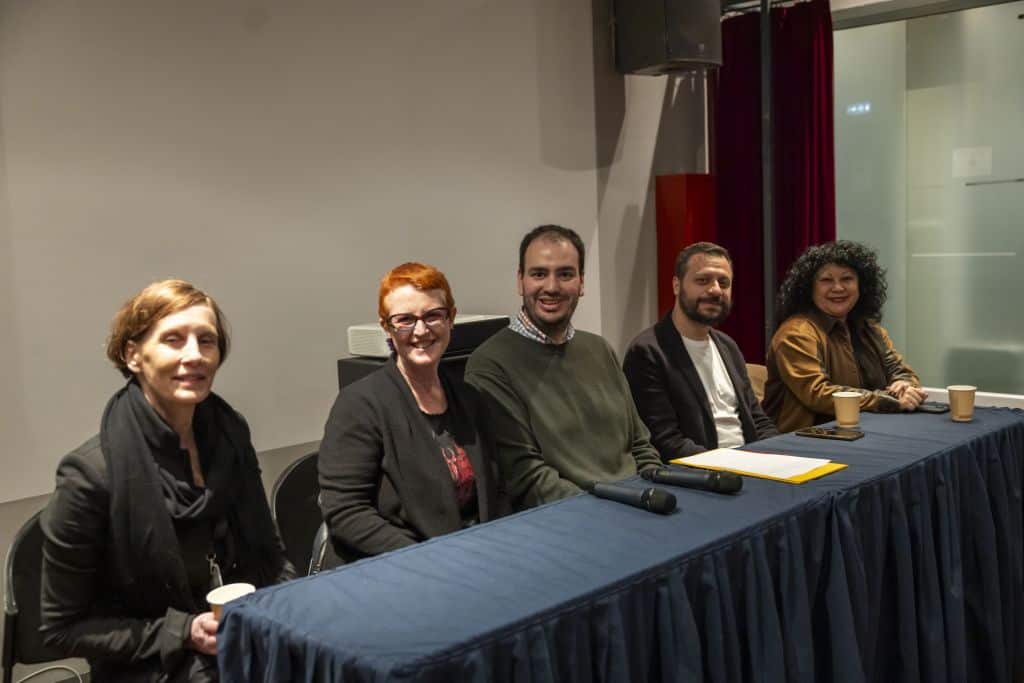
FIPRESCI Panel at Thessaloniki Documentary Festival Discusses the Place of Documentary in the Festival Landscape
March 13, 2026 5 views
EntertainmentArts
A panel organized by FIPRESCI during the Thessaloniki International Documentary Festival brought together prominent members of the international critics’ organization to discuss the evolving position of documentary cinema within the global festival circuit. The discussion was moderated by Filippos Chatzikos, a member of the Greek Association of Film Critics and FIPRESCI.
A Song Without Home is screening at Thessaloniki Documentary Film Festival
Opening the event, Chatzikos welcomed the audience and introduced the panelists: Ahmed Shawky, President of Fipresci, Marina Kostova, Vice-President, Alin Tasciyan, former Deputy General Secretary of the organization, and Stefanie Diekmann, who is serving on the FIPRESCI jury at this year’s festival. The moderator framed the discussion by noting the increasing visibility and recognition of documentary cinema in recent years, raising the question of how critics should approach the form and whether the industry treats documentaries fairly compared to fiction works.
Tasciyan opened the discussion by expressing concern about the way documentaries are often positioned within major film festivals. While acknowledging the existence of dedicated documentary festivals, she criticized the tendency of large international events to include only one documentary in their main competition, often as a token gesture. According to her, this practice reflects a persistent hierarchy within the film industry, where fiction productions are frequently seen as more prestigious or commercially viable.
“For me, cinema is cinema,” Tasciyan noted, arguing that documentary filmmaking involves the same artistic and intellectual processes as fiction. She pointed out that documentaries require extensive research, conceptual development, and editing, yet they are rarely considered for technical awards such as Best Editing or Best Writing in many festival structures. In her view, the assumption that documentaries lack the complexity of fiction remains a major obstacle to their recognition.
Diekmann expanded on this observation, suggesting that the very structure of traditional award categories can make it difficult for documentaries to compete equally with fiction productions. Categories such as acting or costume design naturally favor narrative films, she noted, creating a system where documentaries are often underrepresented in competition lineups.
Shawky approached the issue from a broader institutional perspective, highlighting the role of critics and organizations like FIPRESCI in promoting documentary cinema. While acknowledging that major festivals face programming pressures related to commercial expectations, star power, geographical representation, and gender balance, he emphasized that critics can help create alternative platforms where documentaries receive the attention they deserve.
He pointed to the growing presence of documentary juries organized by FIPRESCI at festivals around the world, noting that the organization currently participates in more than 80 juries annually, with around 20 dedicated specifically to documentary events. These include prominent festivals such as Millennium Docs Against Gravity and DOK Leipzig, among others.
Shawky also announced a significant new initiative within FIPRESCI: the creation of a dedicated Documentary Grand Prix. Traditionally, the organization’s annual Grand Prix, voted on by critics worldwide, has overwhelmingly gone to fiction titles. By establishing a separate award for documentaries, Shawky explained, the organization hopes to give greater visibility to nonfiction cinema without suggesting any artistic hierarchy between the two forms.
“We don’t believe there is a hierarchy between fiction and documentary,” he said. “But this initiative allows us to highlight the documentaries we believe in and provide them with the platform they deserve.”
Kostova offered a more optimistic perspective, suggesting that the growing integration of documentaries within the broader film industry may ultimately reshape the form itself. She noted that in Europe, documentary production is increasingly following development models similar to those used in independent fiction cinema, including pitching forums and script development programs.
While this process can provide valuable support for filmmakers, Kostova also warned that it may introduce bureaucratic pressures that influence the creative process. Nevertheless, she expressed curiosity about how these structural changes might affect the evolution of documentary storytelling in the coming years.
Throughout the discussion, the panelists repeatedly returned to the importance of festivals like Thessaloniki’s documentary event as spaces where nonfiction cinema can flourish outside the constraints of mainstream programming priorities. With sold-out screenings and strong audience engagement, the festival itself served as a reminder that documentary cinema continues to attract significant interest from viewers and critics alike.
The conversation ultimately highlighted both the challenges and opportunities facing documentary filmmaking today, underscoring the role of critics, festivals, and cultural institutions in ensuring that the form receives the recognition and critical attention it deserves.
Tags:Ahmed ShawkyAlin TasciyanFIPRESCIMarina KostovaStefanie Diekmann
Original source
Read original article on Asianmoviepulse.com