
< BACK TO ARTICLES 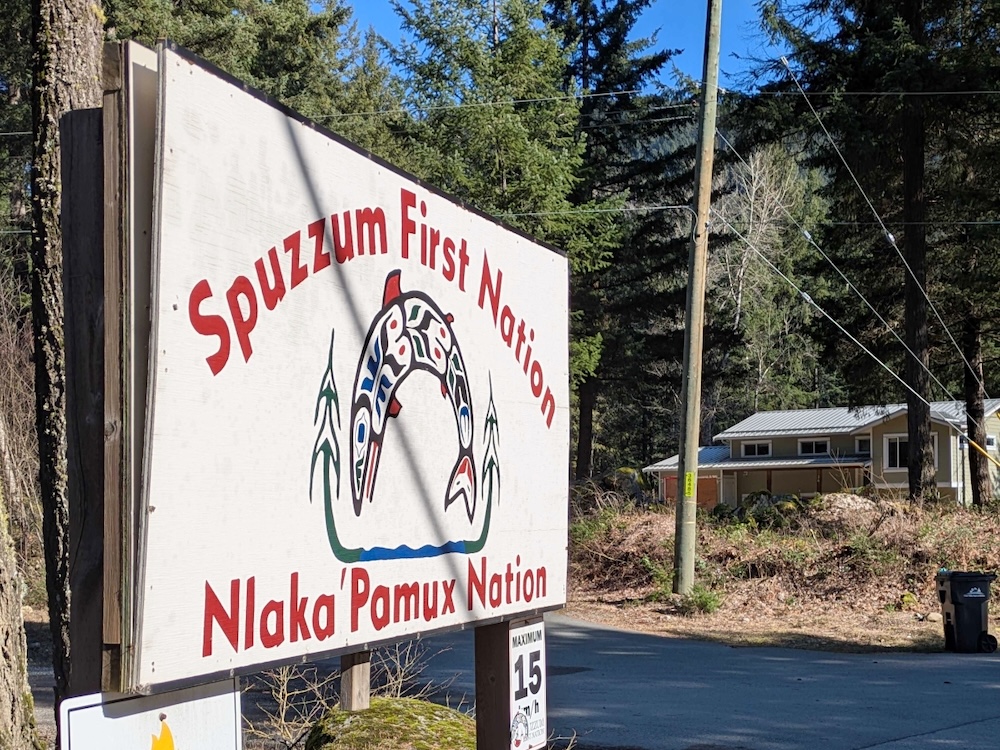
First Nation Sues over Contracts with Telus, BC Hydro | The Tyee
March 12, 2026 5 views
EntertainmentShoppingPoliticsFinanceEnvironment
Spuzzum First Nation is suing the Nlaka’pamux Nation Tribal Council, saying it has seen little benefit from major contracts signed with a slew of major corporations, including Telus, Teck and BC Hydro.
Announcements, Events & more from Tyee and select partners
The Tyee Is Recruiting Our Next Editor-in-Chief
Founding editor David Beers is passing the baton to a new leader. Is it you?
CONTEST: See the World Premiere of ‘On Native Land’
One lucky Tyee reader will win tickets to Corey Payette’s new play, a sweeping love story with a focus on urban Indigenous communities.
In early February, the First Nation filed a lawsuit against the tribal council and its four current member nations, alleging the organization failed to forward proceeds signed on its behalf with government and a variety of major corporations. The contracts predate 2020, when Spuzzum pulled out of the Nlaka’pamux Nation Tribal Council.
The suit alleges that the tribal council used the proceeds from the contracts to buy an Ashcroft-area ranch that Metro Vancouver had once sought to convert to a landfill. It also says the tribal council struck a deal with BC Hydro to facilitate the creation of a major Merritt-area solar farm but refused to provide Spuzzum First Nation with any details.
There are 15 Nlaka’pamux First Nations, with traditional territory ranging from Spuzzum in the Fraser Canyon toward Ashcroft in the north and Merritt in the east.
Although the Nlaka’pamux Nation Tribal Council once represented at least 11 of those First Nations, the organization’s current membership has dwindled over time. Today, it includes only four First Nations: the Lytton Indian Band, Skuppah Indian Band, Boothroyd Indian Band and Oregon Jack Creek Indian Band.
Spuzzum Chief Janice Kuester said her First Nation and others are in the process of organizing a separate Nlaka’pamux coalition.
Although the Nlaka’pamux Nation Tribal Council is not an incorporated organization, Spuzzum First Nation alleges in its lawsuit that the tribal council represented itself as the only “entity... that can speak for Nlaka’pamux people and their communities, including SFN, even when advised by those communities that NNTC could no longer do so.”
The lawsuit says that “in appropriating this bargaining position for itself, the tribal council has collected benefits rightfully belonging to other Nlaka’pamux people, through their individual nations, such as SFN.”
The claims have not been proven and the tribal council has not yet filed a response to the lawsuit in court. Nlaka’pamux Nation Tribal Council did not respond to repeated requests from The Tyee for an interview or comment.
The suit
The lawsuit focuses on alleged commitments made between the Nlaka’pamux Nation Tribal Council, its members — including Spuzzum First Nation, before 2020 — and large companies and government agencies.
According to the lawsuit, Spuzzum and other tribal council members signed contracts with Telus, BC Hydro and mining giant Teck in which the companies agreed to make payments for various rights and services. The Nlaka’pamux Nation Tribal Council was designated as the recipient of those payments. Spuzzum said it was an implied condition that the tribal council would then pass on the payments or any other accrued benefits if and when demanded.
The contracts include a deal with Telus to facilitate the installation of fibre-optic infrastructure, a BC Hydro deal for rights to build a new transmission line between Merritt and the Lower Mainland, an agreement with Teck Highland Valley for consultation work regarding ongoing operations at the Highland Valley Copper Mine, and an economic development agreement with the province for a share of tax revenues from the mine.
In its suit, Spuzzum says the companies fulfilled their side of the bargain by paying money to the tribal council. But the First Nation alleges the tribal council used the funds to invest in a series of business interests, from which Spuzzum First Nation did not receive any benefit.
In particular, Spuzzum alleges some of the proceeds from the deals were used to help buy the Ashcroft Ranch from the Metro Vancouver Regional District for $28 million last year. It says the money was also used to buy two Boston Bar properties. Spuzzum says it has received no benefit from either purchase.
It also says the tribal council struck a deal that involved a promise by BC Hydro to buy energy from a massive solar farm being built near Merritt. The solar project opened in October and is a joint venture of BluEarth Renewables and the tribal council’s member communities. According to the BluEarth website, the tribal council began work in 2011 and struck its deal with BluEarth in 2019. The suit says the tribal council has pegged total revenue from the project to exceed $100 million. But Spuzzum said it was never consulted about its interests in the project and that the tribal council never provided the First Nation with the contract with BluEarth.
BluEarth did not respond to The Tyee’s request for comment.
RELATED STORIES
Why Treaties Are the Best Fix for BC’s Land Uncertainty
The suit says that while it was a member, the organization “excluded SFN from meaningful participation, represented positions contrary to SFN’s interests, and interfered with SFN’s governance and economic development rights.”
The lawsuit also alleges the tribal council signed three agreements between 2015 and 2023 with the province without consulting Spuzzum.
In an email to The Tyee, a spokesperson for the provincial Ministry of Indigenous Relations and Reconciliation said it is up to Indigenous governing bodies, such as tribal councils, to confirm they have the proper authorization to conclude deals on behalf of nations they represent, and to share that information during negotiations.
“The work of determining what constitutes an [Indigenous governing body] lives with Indigenous Peoples as part of their internal work, including the processes and mechanisms they use in establishing the authorization for that entity,” the province said.
New leadership
Spuzzum First Nation’s filing of its lawsuit in February followed last year’s ousting of its longtime Chief James Hobart after he was convicted of assault.
Interim Chief Janice Kuester told The Tyee that she and others had long-standing questions about why Spuzzum First Nation left the tribal council in 2020.
“I started to do some research and what I found is a bit alarming,” Kuester said. She said the lawsuit was filed after “numerous attempts” to get information from the tribal council.
“We decided that the only way that we were going to move forward for our members is to file a civil claim,” she told The Tyee. “We’re seeking transparency and accountability for the investments and business decisions made by NNTC on behalf of its member nations.”
Kuester said Spuzzum First Nation is asserting its authority over its own lands and that the lawsuit is an attempt to ensure it is consulted about matters within its own territory. She said members in other communities have expressed support for the lawsuit.
Tribal council structures
More than 200 First Nations have territory in B.C., and the residents of many communities have close linguistic and cultural ties to one another. Over the last 40 years, First Nations have created myriad tribal and treaty organizations and alliances to facilitate advocacy work, the sharing of services, and negotiations with the federal and provincial governments.
With many First Nations having fewer than 1,000 members, joint organizations can help improve efficiencies and allow small communities to pool their resources.
Membership in such organizations commonly shifts, as the priorities of leaders converge and diverge, and as their First Nations seek greater integration — or greater independence.
“The idea of a tribal council would be really good if the people were actually looking after their member communities,” Kuester said. “When you’re making decisions for member communities and they’re not seeing the benefits that were directly negotiated on their behalf, that’s when it becomes a problem.”
Challenges can also arise because First Nations’ territories often overlap, and communities can have different priorities about the best use of that land.
Why Treaties Are the Best Fix for BC’s Land Uncertainty
read more
A major proposed project by Spuzzum First Nation offers an example of those differing priorities and values — though it’s not at issue in the lawsuit. Spuzzum has applied to create a ski resort in the South Anderson Valley, near the Coquihalla Summit. The land is in its territory, but other Nlaka'pamux First Nations have voiced concern about the project — and asserted that the land is also in their own traditional territory. Last year, the Nlaka’pamux Nation Tribal Council said development of the project area “would cause irreparable harm.”
Spuzzum, meanwhile, has asserted that the tribal council has no jurisdiction in Spuzzum First Nation’s territory. Kuester said the project is continuing through the environmental assessment process.
With no prospect of an agreement with the Nlaka’pamux Nation Tribal Council, Kuester told The Tyee that her First Nation and others are moving on. She said Spuzzum and 10 other Nlaka’pamux bands have created a new coalition to be called Nlaka’pamux Band Coalition, and that they have told the province they “won’t accept them negotiating with NNTC anymore.”
“We’re definitely not the only one experiencing issues,” she said.
Read more: Indigenous, Rights + Justice
Original source
Read original article on Thetyee.ca