
< BACK TO ARTICLES 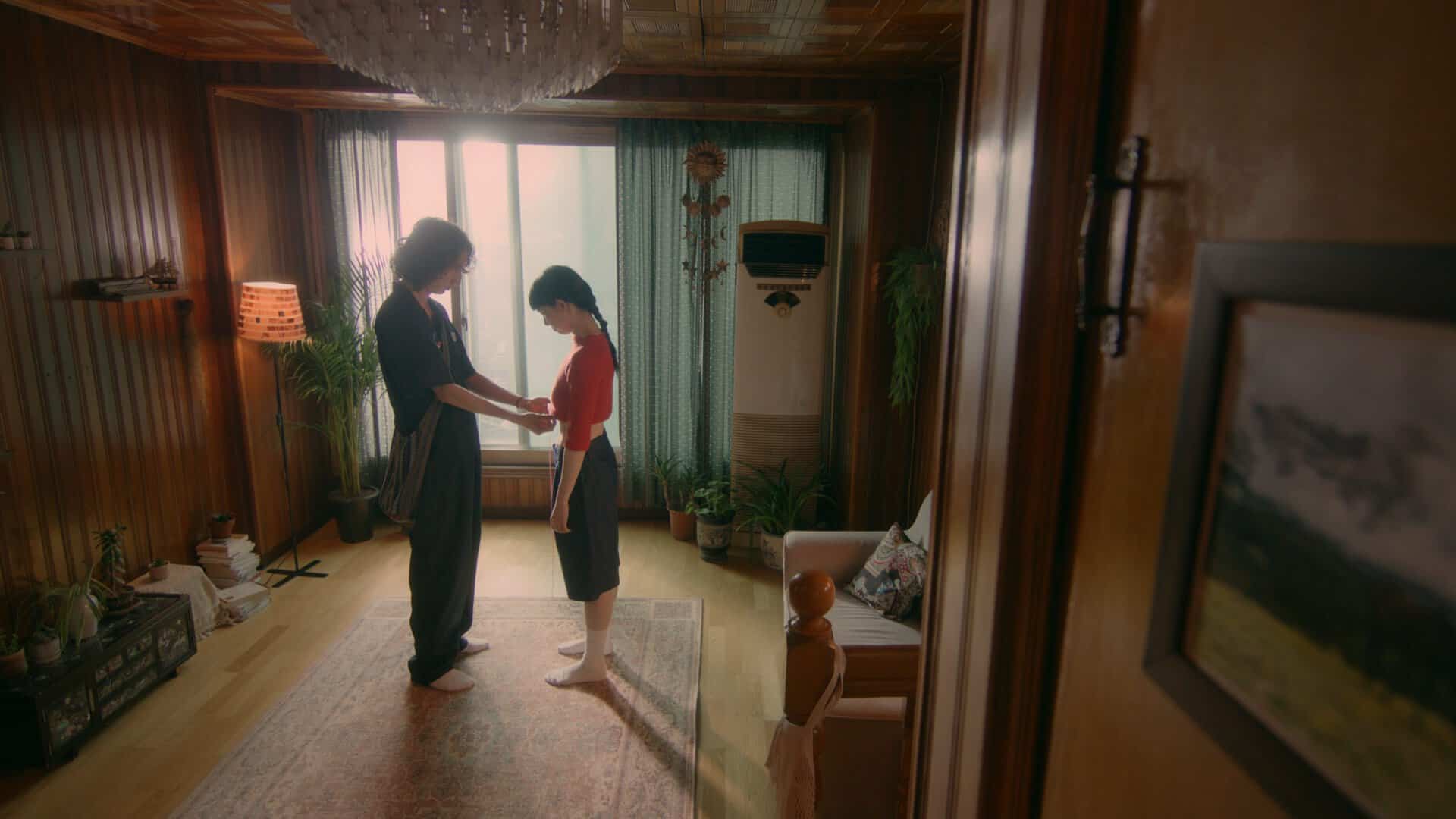
From Shorts to Features: 4 Directors Setting the Tone for the Next Generation of Korean Filmmakers
April 29, 2026 1 views
EntertainmentLifestyle
The current landscape of Korean cinema reveals a rather intriguing paradox. As I’ve mentioned a number of times before, the short film industry currently seems more engaging than its feature-length counterpart, a statement that becomes increasingly evident when examining the output of emerging filmmakers in the post-pandemic era. This is particularly true because the short format still encourages experimentation while frequently maintaining the high production quality that once made Korean cinema stand out.
Within this context, a new generation of directors has been steadily making its mark through short films of remarkable quality, suggesting that the transition to feature filmmaking is not only imminent but also highly anticipated. The fact that many of these filmmakers have already demonstrated a confident command of narrative, aesthetics, and performance direction in shorter formats further reinforces the expectation that their eventual move to full-length works will be a natural and significant evolution.
La Sang-jun is perhaps one of the most striking examples of this trend. With “Necrophilia”, he presents a work that eloquently proves this point, combining an undeniably original premise with technical precision and tonal dexterity. The story, centered on a (predictably one-sided) love story between a mute medical examiner and a corpse, unfolds with an impressively staged opening before transitioning into a narrative that balances black comedy, thriller elements, and drama. The scenes where Gi-yeon falls in love rank among the funniest and most memorable of the year, yet the filmmaker does not remain confined to humor. His ultimate decision, which changes his life entirely, reframes the entire affair as one of true love, however unsettling the context, deepening the conceptual impact of the story.
What truly sets La apart, however, is his command over cinematic language. Lee Jun-hyeong’s cinematography, with its shadows, desaturated tones, and occasional foggy textures, suits the atmosphere perfectly, while La’s own editing keeps the pacing brisk, allowing the story to unfold fluidly over 28 minutes. Moreover, the film transitions smoothly from black comedy to thriller, and eventually to drama, with the tonal shift reinforced by changes in the score. In this regard, the overall sound design is especially noteworthy, demonstrating a level of sophistication that would not feel out of place in a feature production. Considering that “Necrophilia” is a truly brilliant work, easily one of the year’s best, not just among shorts but across the board, it is difficult not to anticipate La Sang-jun’s next step with considerable interest.
A similarly compelling case can be made for Junh Yoon-ah, whose “I’m Here to See the House” exemplifies the capacity of short filmmaking to engage directly with pressing social issues. The issue with housing in Seoul in particular has been one tormenting the locals for quite some time now, and the director uses this backdrop to construct a narrative where everyone involved are on the right. This approach, avoiding simplistic moral binaries, allows the story to unfold with a sense of realism that resonates deeply, as the fault is not with the individual, but with the system, with the pressure actually being piled up both from the financial and the social one.
The tension that emerges from these circumstances becomes the driving force of the narrative, actually carrying it until the breaking point, that even involves violence. The performances play a crucial role here, with Kim Ja-young as Seon-ok and Park Hye Young as Ja-hyun delivering work of remarkable intensity, particularly in the moments where their conflicting interests collide. At the same time, Lee Young-hun’s cinematography includes long shots in order to highlight the exteriors and the many close ups in interiors, an approach that works nicely for the movie, while Choi Cha-mi’s editing results in a relative fast pace that suits the aesthetics nicely.
Ultimately, the short stands as an excellent movie, one that manages to make its realistic comments in quite eloquent and entertaining fashion, and a testament to the intense progress Korean cinema has been exhibiting in short filmmaking during the last few years. In this sense, Junh Yoon-ah appears more than ready to expand her thematic concerns and narrative scope into feature-length storytelling.
Jin Roh’s “Hunted Owl Family” offers yet another perspective on the versatility of emerging Korean filmmakers. A spy drama about a family whose inner conflicts may bring about their downfall, the short demonstrates how genre filmmaking can be reimagined within limited duration. Not only is “Hunted Owl Family” a spy drama, but it also works as a silent film, a choice that immediately sets it apart within the often very experimental landscape of short features in general. By not relying on any dialogue, the burden to carry the narrative as well as the conflicts within and between the characters lies on the actors, the images and the sound, all of which succeed in making the project work as the genre blend it aims to be.
The aesthetic approach further enhances this achievement. The combination of lighting, colors and the overall design choices give a very distinct noirish vibe, while the setting of the remote hotel functions as a metaphor for the family in hiding and having lived in isolation for some time. The performances also contribute significantly, as Zhang Uidon highlights the idea of a person feeling trapped and in danger of being caught, while Kim Cheolyun and Hong Sooyeong emphasize the need for their characters to break out and get in touch with the world outside. Director Jin Roh succeeds in creating an aesthetically and narratively pleasing short feature which shows a great talent for visual storytelling and precise direction, qualities that strongly indicate his readiness for more ambitious projects.
Finally, Oh Ji-hyeon’s “Knitting My Heart” introduces a different tonal register, focusing on humor and romance while still demonstrating notable craftsmanship. Humor in Asian movies is a hit-or-miss deal, yet the director’s reliance on deadpan proves particularly effective, as this is exactly the style she chose for her debut. The narrative moves from a somewhat bitter comedy to a romance with remarkable fluidity, with the flashback structure working nicely in that regard. If the first part makes one laugh, the second one will definitely put a smile on the face of every viewer, highlighting the filmmaker’s ability to balance emotional tones within a concise runtime.
Equally important is the attention to technical detail. The sound of the heartbeat, the rather well-done exterior shots, and the editing, which is actually part of the humor, are all very carefully done, resulting in a short that one would have to search very hard in order to find even the smallest flaw. Combined with the truly exceptional performance of Anu Heeyeun Shin, whose expressive presence becomes one of the main mediums of the humor, the project emerges as a rather pleasant, funny, and well-shot short and a more than hopeful debut for Oh Ji-hyeon.
Taken together, these works highlight a broader movement within Korean cinema, where emerging directors are using the short format not merely as a stepping stone, but as a space for innovation and refinement. The diversity of themes, from unsettling romance and social realism to espionage drama and deadpan comedy, underscores the richness of this new wave. At the same time, the consistent emphasis on high production values and precise direction suggests that these filmmakers are already operating at a level that can seamlessly translate into feature filmmaking.
In the post-pandemic era, where the industry continues to recalibrate, this influx of talent signals a promising future. If the short film industry currently seems more engaging than its feature-length counterpart, it is largely because of directors like La Sang-jun, Junh Yoon-ah, Jin Roh, and Oh Ji-hyeon, who are redefining what can be achieved within limited runtime. As such, the transition from shorts to features does not simply appear likely; it feels inevitable, and perhaps even necessary, for the continued evolution of Korean cinema.
Tags:Hunted Owl FamilyI’m Here to See the HouseJin RohJunh Yoon-ahKnitting My HeartLa Sang-junNecrophiliaOh Ji-hyeon
Original source
Read original article on Asianmoviepulse.com