
< BACK TO ARTICLES 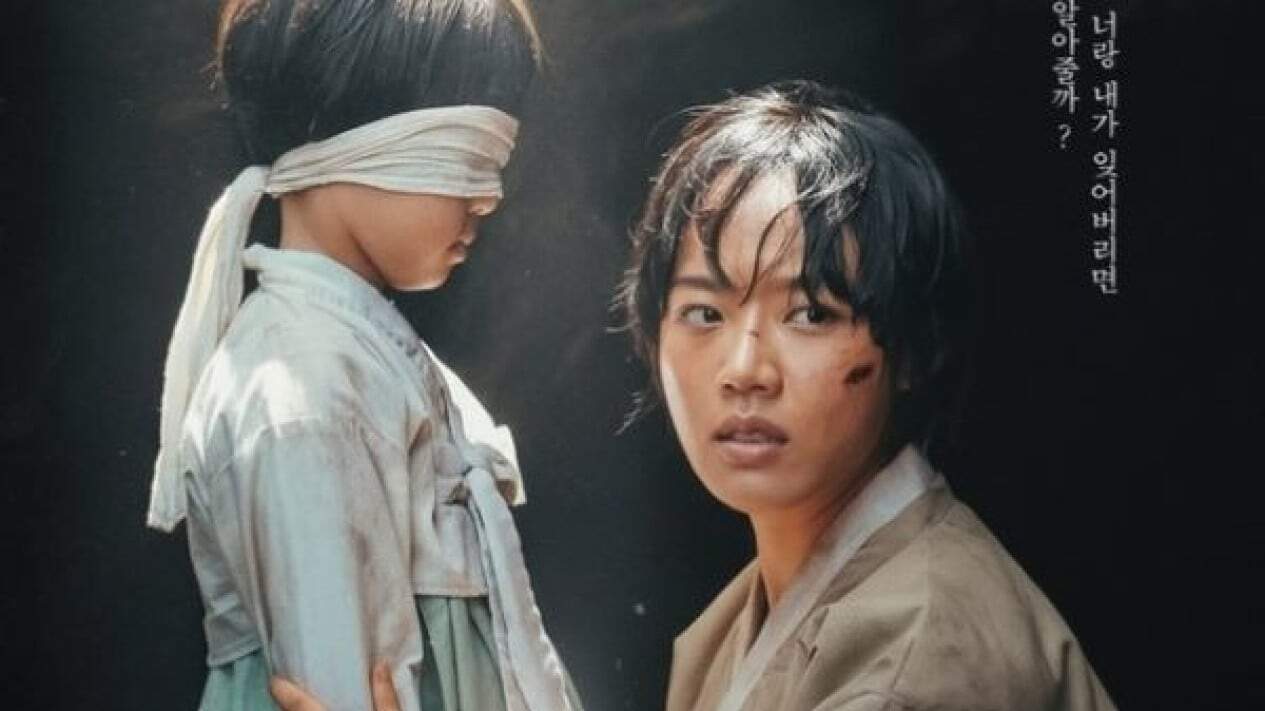
Hallan (2025) by Ha Myeong-mi Film Review
March 16, 2026 5 views
EntertainmentLifestyle
The Jeju 4.3 Incident refers to a period of violent repression on South Korea’s Jeju Island between 1947 and 1954, during which tens of thousands of civilians were killed. The unrest began as protests against plans to hold separate elections in the U.S.-occupied South, with many residents fearing that such a move would permanently divide the Korean Peninsula. When some demonstrators eventually took up arms, government forces, supported by right wing paramilitary groups, launched a brutal campaign across the island, burning villages and executing anyone suspected of harboring leftist sympathies. By the time the violence subsided, more than 30,000 people had died, roughly ten percent of Jeju’s population at the time. For decades afterward, particularly during South Korea’s military dictatorships of the 1960s through the 1980s, public discussion of the events was heavily suppressed, and even mentioning the massacre could lead to imprisonment.
Eventually, however, cinema began dealing with the events, with “Jiseul” probably being the most renowned title and “Soup and Ideology” following. In this context, Ha Myeong-mi presents her own take on the events by interlocking family drama and a child’s perspective within the narrative.
Hallan is screening at Helsinki Cine Aasia
The story centers on Ah-jin, a young mother living on Jeju Island with her daughter Hae-saeng. Before the Jeju Uprising, their life is peaceful in a small coastal village with Ah jin’s schoolteacher husband, but everything changes when he joins the left wing guerrillas hiding in the island’s mountainous interior. As tensions escalate and government forces intensify their crackdown on suspected sympathizers, many villagers decide to flee to the mountains in order to survive. Ah-jin follows them hoping to escape the violence, yet she leaves Hae-saeng behind with her grandmother despite the child’s desperate pleas. For a brief moment life seems stable for those remaining in the village, but that illusion shatters when soldiers led by Sergeant Park, accompanied by American military officers, arrive and accuse the villagers of supporting the insurgents. Without any real evidence, the troops open fire, unleashing one of the most heartbreaking moments in the story.
While the massacre unfolds, Ah-jin grows increasingly anxious about her daughter’s fate, even though a close friend, a village shaman, reassures her that Hae-saeng is still alive. Unable to remain hidden any longer, she ventures back toward the village alone, only to face a series of dangers that reveal the brutality on both sides of the conflict. Particularly the reappearances of Jeong-nam and his group of locals highlight this aspect quite eloquently. At the same time, the narrative follows Hae-saeng, who miraculously survives the attack but is left to wander alone through the mountains, unaware of the larger political turmoil surrounding her.
Ha Myeong-mi comes up with a work with many strong traits but also some significant faults. Among the former, the authenticity of the overall approach, particularly in the linguistic aspect, emerges as one of its most impressive values, as the director went to great pains to include the different dialects spoken on the island. The same applies to the way the conflict is presented, with Ha showing the terror both sides extended to a number of people who simply, or perhaps naively, did not want to be involved. Furthermore, if the violence coming from Sergeant Park is essentially systemic, with him following orders even if he clearly goes too far, the one stemming from Jeong-nam depicts the paranoia that grips people during wartime, with his actions appearing almost ridiculous if they were not so horrid.
The child’s gaze, as presented through Hae-saeng, works particularly well within the same prism of depicting the blights of war, while the performance by Kim Min-chae is truly exceptional. The way she both fails to understand and simultaneously suffers from what happens around her becomes a true wonder to watch. Particularly her interrogation by Sergeant Park will definitely remain in the viewer’s mind, additionally serving as a sample of the tension that permeates the narrative, another of its strongest traits.
Furthermore, the cinematography by Eom Hye-jeong, especially in the way he captures the aforementioned gaze, the forest landscapes, and the overall beauty of the island amidst all the violence and paranoia, results in a number of scenes that will definitely stay with viewers.
This is also where the issues begin. For starters, there are simply too many characters appearing throughout the movie, a number of whom do not have enough time to generate empathy, with the shaman in particular struggling within this framework. At the same time, the approach seems to aim at presenting as many of the island’s natural beauties as possible. While this works visually, it eventually becomes somewhat apparent and overly pronounced. Furthermore, Ha does not avoid the reef of forced sentimentalism, with several episodes moving toward misplaced melodrama, a tendency frequently accentuated by the music. The action toward the end is also somewhat unrealistic, essentially moving toward Hollywood style spectacle, while certain characters, particularly Sergeant Park, are portrayed with such overt cruelty that they verge on caricature. This aspect is further emphasized by the performance of Hwang Jung-nam, who nevertheless conveys the character’s villainy quite convincingly.
Lastly, Lee Yeon-jeong’s editing works well in terms of pacing and the succession of the different narrative arcs. However, it could have been tighter toward the end, when the story stretches for no apparent reason, resulting in a somewhat excessive runtime of 119 minutes.
On the other hand, two performances clearly stand out. Kim Hyang-gi as Ah-jin is exceptional in the role of the desperate mother trying to save her daughter while facing forces far greater than herself. Meanwhile, Kim Da-hwin as Jeong-nam highlights how violence can appear logical within completely illogical circumstances, crafting a character who seems at once like a pitiful victim of the situation and a dangerous wild dog.
Overall, there are many admirable traits in “Hallan” but also a number of clear faults. The balance ultimately leans toward the former, though not quite enough to deem the movie great, despite the fact that the potential was certainly there.
Tags:Eom Hye-jeongHa Myeong-miHallanHelsinki Cine AasiaHwang Jung-namKim Da-hwinKim Hyang-giKim Min-chaeLee Yeon-jeong
Original source
Read original article on Asianmoviepulse.com