
< BACK TO ARTICLES 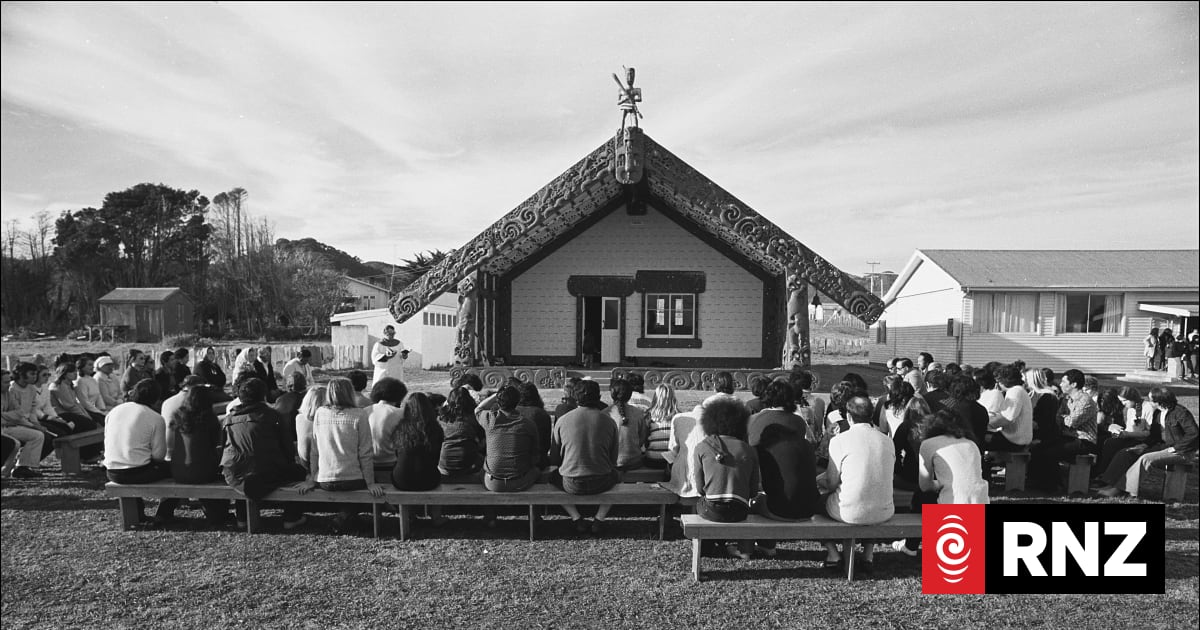
How a 'weekend wānanga' kickstarted the Māori art revolution | RNZ
February 27, 2026 16 views
LifestyleArts
How a 'weekend wānanga' kickstarted the Māori art revolutionA new RNZ podcast explores the people, places and ideas that have shaped the renaissance of Māori culture.Pokere PaewaiMāori issues reporter 28 February 2026fromPūtātara: Revolutions in Māori Art4 min readPokere PaewaiMāori issues reporter 28 February 2026fromPūtātara: Revolutions in Māori Art4 min readCaption:Morning karakia at Te Kaha-nui-a-Tiki marae in 1973 photographed by John Miller. Attendees of the first hui of the Māori Artists and Writers Society, later named Ngā Puna Waihanga, gather on the marae ātea.Photo credit:Image courtesy of John MillerIt was just a "weekend wānanga", but an artists' hui in Te Kaha in 1973 ushered in Ngā Puna Waihanga, the Māori artists and writers collective and drove a revolution that shaped the renaissance of Māori culture.It makes a fitting starting point for the new RNZ podcast Pūtātara: Revolutions in Māori Art, produced by Jamie Tahana and Matariki Williams and funded via the Creative New Zealand, NZ On Air and RNZ arts and culture podcast co-fund."Actually, so many of our revolutions, because it's in the title there, start in small communities like Te Kaha. It was a bunch of concerned artists and writers who just decided to have a get-together," producer Jamie Tahana told Māpuna host Julian Wilcox. Pūtātara: Revolutions in Māori Art podcast hosts Matariki Williams and Jamie Tahana.Taylor Galmiche/RNZRelated storiesPūtātara: Revolutions in Māori ArtCulturePhoto album5 photosMāori art returns to New York’s Met museum in reimagined exhibitionAbout 650 works are back on display in New York City at the Metropolitan Museum of Art’s permanent Oceania exhibition following a major renovation and reenvisioning.Culture4 min readLifting the tapu: Māori women who carveIt’s commonly assumed that Māori women don’t carve, but one group of wāhine are creating an environment to support others who want to learn the craft. Culture5 min readThe podcast is full of archival flourishes from that hui, including a poetry reading by Hone Tuwhare, as well as interviews with the likes of photographer John Miller (who photographed the hui), and author Patricia Grace, who published a collection of short stories, Waiariki, not long after the hui. She was the first wahine Māori to do so.Tahana says the idea for the podcast came up around the 40th anniversary of the landmark Te Māori exhibition in New York in 1984. Realising that Te Māori was itself a response, they decided to move the start date back a decade. "I guess what we were trying to do, Matariki in particular.... was, you know, say that so many things flourish from places that aren't the Metropolitan Museum, that aren't Te Papa, that, you know, these were just a bunch of people concerned for their whānau, their reo."Protesters on Waitangi bridge clash with police photographed by John Miller, 1996.Image courtesy of John MillerThroughout the 70s, pressure from Māori protest was beginning to bear down on the government and wider New Zealand society. Ngā Tamatoa delivered the Māori Language Petition to Parliament in 1972 and Whina Cooper led a march across the North Island in 1975. As in many protest movements, artists were part of the revolution."The rising visibility brought on by protest was bearing fruit and museums and galleries were by no means immune," Williams says in the podcast."Māori wanted toi Māori to be looked at differently, to be seen, to be heard, for it to be known that Māori art was alive."The resistance and spirit of contemporary Maori artNine To NoonDownload MP314mFrom that consequential hui in Te Kaha, the podcast moves on to New York and the opening of Te Māori at the Metropolitan Museum of Art and the exhibition's return to Aotearoa, through the tumultuous 90s, eventually returning to the Met for the reopening of its permanent Oceania exhibition in 2025. Tahana says museums and institutions like the Met and Te Papa are as much sites of power as they are sites of art and wonder.Māori artists and writers have been a leading voice in challenging institutions, for example, in how taonga Māori are displayed and cared for, he says."In many strands of society, artists and writers from communities like Te Kaha have provoked challenges... there's one episode where we go to the '90s when all the debate around the foundation of Te Papa was happening which came off the back of things like Haeata, Te Māori and all of those things and that debate was coming up when Te Papa was being formed and people have held it accountable since."The People GatherPūtātara: Revolutions in Māori ArtEpisode 1Download MP340mRelated storiesPūtātara: Revolutions in Māori ArtCulturePhoto album5 photosMāori art returns to New York’s Met museum in reimagined exhibitionAbout 650 works are back on display in New York City at the Metropolitan Museum of Art’s permanent Oceania exhibition following a major renovation and reenvisioning.Culture4 min readLifting the tapu: Māori women who carveIt’s commonly assumed that Māori women don’t carve, but one group of wāhine are creating an environment to support others who want to learn the craft. Culture5 min readThe resistance and spirit of contemporary Maori artNine To NoonDownload MP314m28 February 2026
Original source
Read original article on Rnz.co.nz