
< BACK TO ARTICLES 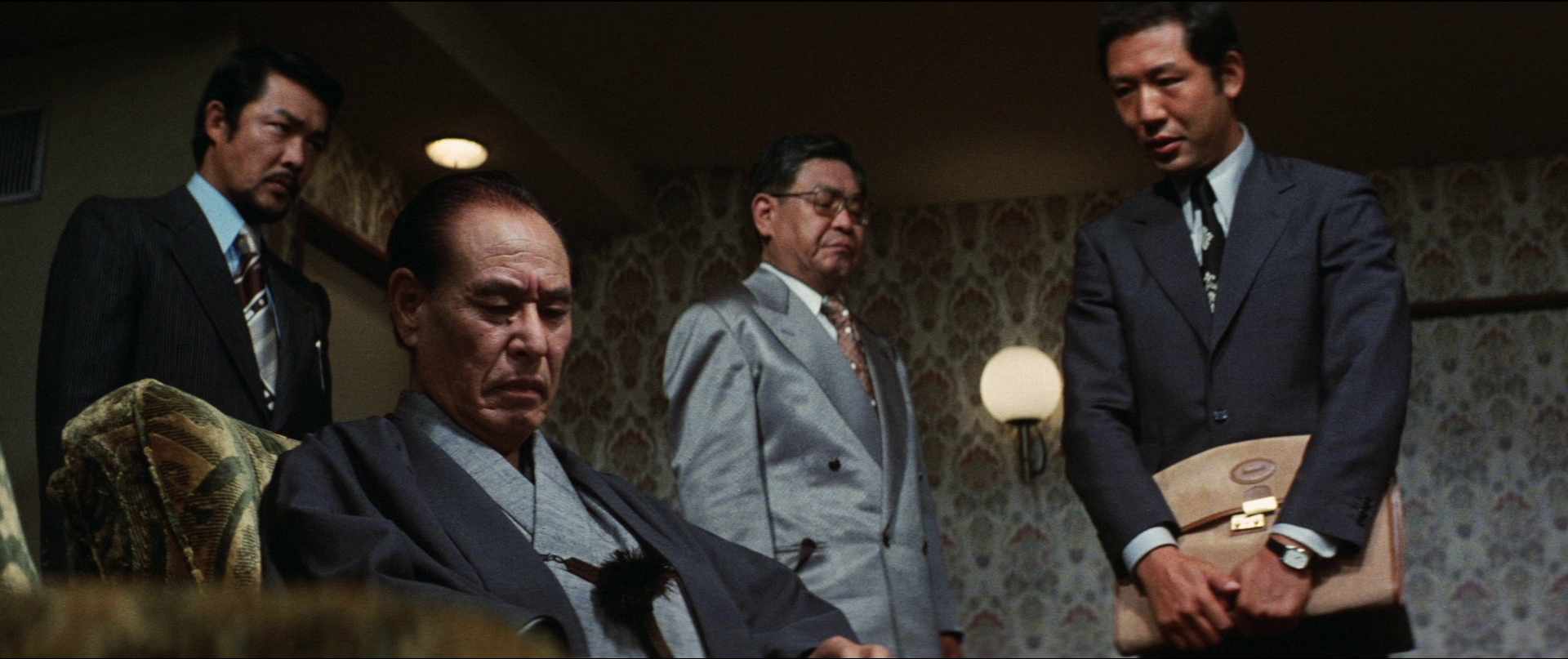
Japanese Godfather (1977) by Sadao Nakajima Film Review
March 16, 2026 6 views
EntertainmentShoppingLifestyleBusiness
After the end of the Second World War, it took a while for Japan’s cultural landscape to fully convey the political, economic and social consequences of this event. Genre cinema in particular became a telling reflection of the present situation while also carefully predicting what the future might hold in store. The yakuza film may serve as a prime example of this idea. Yet even though directors such as Kinji Fukasaku would go on to achieve acclaim both nationally and internationally, the same cannot be said for the works of his colleague Sadao Nakajima.
His “Japanese Godfather” trilogy is not only one of his most ambitious works, it is also a dissection of the various links between the world of Japanese politics, society and the criminal underworld. Although it may lack the drama and brute force of “Battles Without Honor and Humanity”, its almost clinical perspective on how crime influences and eventually corrupts the lives of people is quite revealing when it comes to the director’s view of his home country and its institutions.
Buy This Title by clicking on the image below
Sakura (Shin Saburi) is the head of the Nakajima group, a powerful yakuza family controlling most of the Japanese underworld. Due to its corporate-like structure, Sakura has managed to reign over his men with an iron fist, silencing any opposition. Yet his power has its limits, which is why an alliance with the equally influential Abebo industrial conglomerate may provide the right opportunity to extend his reach while also becoming less visibly associated with the underworld. Sakura agrees to assist them and orders his men to contact other companies in order to establish additional fruitful relationships with the Japanese economy.
However, Sakura’s ambitions do not go unnoticed. Whereas other families demand a piece of the action and attempt either to copy or to thwart the negotiations of the Nakajima group, Abebo’s competitors and partners become increasingly nervous. Matsueda (Hiroki Matsukata), Sakura’s right-hand man in dealing with the conglomerate, finds himself torn between loyalty to his boss and the attempt to prevent an all-out war.
While Kinji Fukasaku explores the violence of the yakuza as a mirror of the generational conflict within Japanese society, Sadao Nakajima presents the power play between the economy and the underworld. It is quite telling how viewers may find it difficult to distinguish between gangsters and company representatives, not only because of their similar fashion choices but also because of their general behaviour. In “Battles Without Honor and Humanity”, violence is always on the surface, ready to erupt at any minute, whereas in “Japanese Godfather” it becomes impersonal or even an afterthought, as if the men were mere chess pieces used to dominate their opponents. Nakajima portrays a silent transition from street violence and warfare to backroom politics and negotiations — a trend that would certainly influence later yakuza features such as Takeshi Kitano’s “Outrage” trilogy.
Consequently, “Japanese Godfather” is a rather cold film, much less about violence and far more about power plays and manipulation. The relationship between the characters played by Shin Saburi and Hiroki Matsukata is key and represents one of the most important dramaturgical aspects of Nakajima’s feature. The latter undergoes perhaps the most fascinating development throughout the plot, moving from being deeply embedded within yakuza tradition and hierarchy to becoming a link between the underworld and various companies and business partners. A bond defined by loyalty and trust is slowly hollowed out by incentives from multiple sides — a dilemma highlighted through Matsukata’s clever and subtle performance.
On the other hand, Saburi plays Sakura as a Janus-faced manipulator who gradually turns into a tragic figure. His bond with his adopted daughters, played by Sayoko Ninomiya and Maki Orihara, illustrates how Nakajima portrays a yakuza patriarch whose idea of family does not rely on emotional bonds but rather on profit and gain. Interestingly, this perspective also influences the overall aesthetic approach which — as mentioned before — often appears clinical and almost documentary-like.
The first part of “Japanese Godfather” is therefore a solid beginning to what becomes an exploration of the bonds between Japanese politics, the economy and the underworld. Sadao Nakajima’s approach is less action-oriented, as his gangsters tend to negotiate and manipulate from a safe distance, leaving the execution of their plans to pawns. He portrays a cold, calculating world defined by personal gain and the exploitation of others.
Tags:Hiroki MatsukataJapanese GodfatherMaki OriharaRadiance FilmsSadao NakajimaSayoko NinomiyaShin Saburi
Original source
Read original article on Asianmoviepulse.com