
< BACK TO ARTICLES 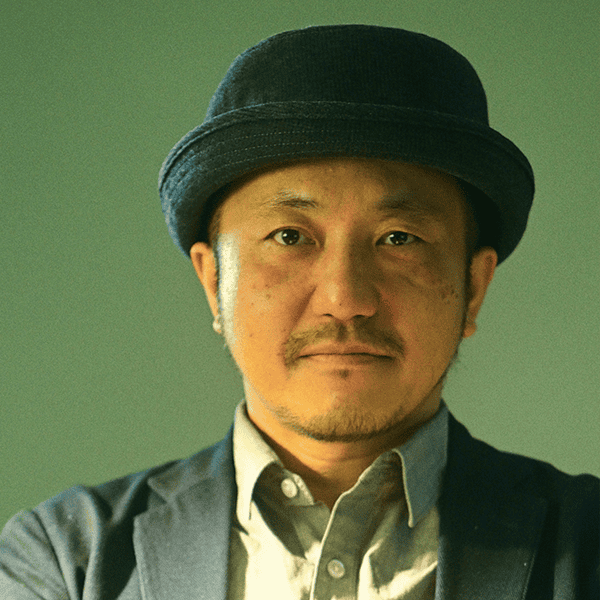
Kazuya Shiraishi Interview: It's Important to Maintain a Sense of Humanity
March 7, 2026 10 views
EntertainmentBreaking NewsLifestyleGaming
Translation by Monika Uchiyama
Kazuya Shiraishi continues to bring his unique contemporary filmmaking across a wide range of genres. One of his latest films, “Bushido,” revitalizes the spirit of classic samurai cinema while offering a fresh approach that will resonate with both longtime fans and newcomers. Recently, Film Movement acquired the film for U.S. distribution, with a nationwide theatrical release in select theaters beginning March 13th.
To commemorate this news, we speak with Kazuya Shiraishi about the movie, deconstructing the samurai code, communication through Go, working with the actors, and more.
Much like the rakugo story it’s based on, “Bushido” tackles the concept of pride amongst the samurai. What interests you most about the concept of pride and the samurai moral code?
So, of course, I think that there is importance in our lives, day to day, to feel responsibility towards the things that we do. That’s certainly a big theme for me and how I live my life. I think in order to feel pride in what you do, you have to face your own responsibilities, and that’s an ethos that has been passed down from generation to generation in Japan. I think that’s the importance of also showing that in this film.
This film really delves into the psychology that comes with serious devotion to bushido, especially with how those values can become twisted, with Kakunoshin being a victim of a corrupt system.
Much like what you said earlier, that sense of pride and responsibility can lead to a tendency to be too firm in one’s beliefs, and that can also cause friction within society. I think that’s led to many issues in society, including contemporary society. I think that it’s an important theme within the film to think about that balance of one’s will and one’s sense of responsibility and sense of self, and how that needs to be kind of compartmentalized sometimes in order to make one’s way through society.
With how this film deconstructs bushido, do you hope viewers will come away seeing that true honor lies in human decency?
Yes, I think that things like decency or living a straightforward life are the teachings within bushido that are important. But I think with the film, I’m trying to show that if you don’t waver from these principles, it can be very difficult to actually live, and that there are actually foundational things that are even more important than, for instance, a straightforward way of living. That might be familial love, the love between a parent and their child, and although this isn’t so clear in the film, relationships between people. So I think I’m just trying to point towards what is truly important and foundational for living a good life.
It really shows in the film through Kakunoshin’s relationship with his daughter, Okinu, and his journey to confront his old rival, Shibata.
It fundamentally becomes a question of systems. Once a system is established, the people within it are seen as merely parts of it, and you lose a bit of humanity, and maintaining the system becomes the only important thing. I think that placing so much importance on these systems, whether it’s codes of honor or codes of living, can lead to a very difficult situation or a difficult life for the people within them. With this film, I’m trying to say it’s important to maintain a sense of humanity and to make sure that, through our relationships with one another, we see each other as individual people.
Check the review of the film
Film Analysis: Bushido (2024) by Kazuya Shiraishi
A compelling aspect of this film is its incorporation of the strategic board game Go into its storytelling. You’ve once described playing Go as another form of conversation. Can you elaborate more on that?
Go has very simple rules, but it’s a really complicated game. It’s a game where one’s personality can really come through in one’s strategy, so much so that if you look back at the moves and strategies of people 100 years ago, which are recorded, you can see the personalities come through of these players who were basically professionals. I thought that was so beautiful and interesting. I don’t know a lot about Go myself, but I learned about it from professionals who play. It’s kind of this unknown world, and that’s what’s so beautiful about Go. Even just the black-and-white pieces. I found that contrast to be so cinematic, and it was really important for me to include those scenes.
The cast did a wonderful job. What was collaboration like with your actors, such as Tsuyoshi Kusanagi?
With regards to Kusanagi-san, he’s a former pop star turned actor. Today, he’s mostly working as an actor and has risen to become a very important actor in Japan. What’s interesting about working with him is that he is very intuitive. Whenever I would give him direction, he would immediately embody those directions into his acting. He’s certainly somebody I wanted to work with, but once I got to have him on set, I found that he had a different sensibility from the other actors, and it was a very fun process working with him.
He’s great in the film. Everyone did a great job, including Kaya Kiyohara, Jun Kunimura, and Takumi Saitoh.
Yeah, Saitoh-san was the only one I had worked with before. Everyone else was brand-new to me when it came to collaborating. It was kind of a miraculous casting situation. Every day was so fun for me, and it was just a really happy experience on set.
The film looks beautiful, and the choice for natural lighting is visually striking. Can you touch on what influenced the decision to use natural lighting and if any challenges arose during filming?
We worked with natural light, and I think that cameras today have become increasingly sensitive to where we can use them to shoot in the dark. Back then, it was a world where you would just use a single candle to illuminate your space where you were playing Go. For me, it was less about capturing natural light and more about how we film in darkness. That was something that I needed to experiment with, especially in these Go scenes. How might I film in extremely dark conditions? I thought that, once I could depict the beauty of darkness, then the beauty of natural light would also become very apparent, and that’s how I constructed the overall look of the film.
The samurai fight scenes in the film are much more realistically depicted than the more heavily stylized action seen in recent years. Are you more drawn to action that is depicted with realism?
Whether it’s samurai films or other films, it’s always been important for me to try to realistically depict these fight scenes. Of course, there are things that you can do, like use wire work to create these really fantastic effects. But, for me, it’s really about how we use very realistic movements to create a dynamic fight scene. That’s been important to me throughout my career. There’s an action director that I have worked with for a very long time, and we choreographed these scenes together through intense discussion.
Thank you so much for taking the time to do this interview, Shiraishi-san.
Thank you so much.
Tags:BushidoFilm MovementJun KunimuraKaya KiyoharaKazuya ShiraishiTakumi SaitohTsuyoshi Kusanagi
Original source
Read original article on Asianmoviepulse.com