
< BACK TO ARTICLES 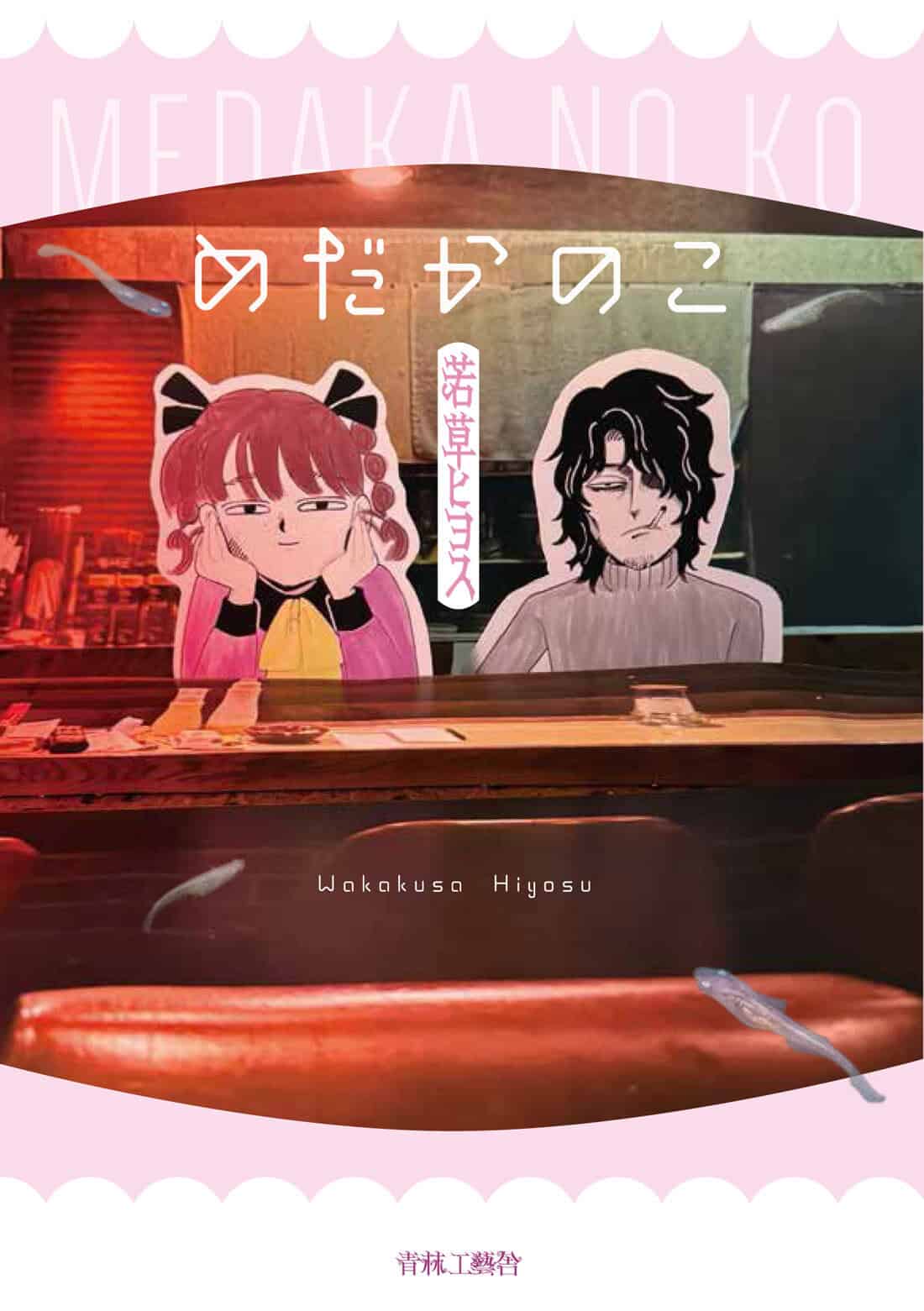
Medaka no ko (2024) by Hiyosu Wakakusa Manga Review
March 7, 2026 11 views
Lifestyle
Probably the youngest successor to date to the glorious tradition of “Garo” magazine, in her debut “Medaka no ko” (lit. “Medaka’s Kid”) Hiyosu Wakakusa presents us with a surreal coming of age story that feels “more real than real life,” in the words of mangaka and Wakakusa’s mentor Hiroshi Sato.
Mr. Medaka does not seem to care much about anything in life, not even his own café. This until a mysterious girl named Lylac, who claims to be a witch with no magic powers, shows up for a cup of coffee and attempts suicide from the store’s terrace shortly afterward. Saved by the timely intervention of part-timer Ms. Kawasaki, Lylac is then taken under Medaka’s wing, though the main problem for her remains: what can she do with her pointless life? Through a handful of weird encounters (including her ex-boyfriend, a Chinese sorcerer) and psychedelic trips in the land of witches, Lylac will eventually learn the truth about her parents, and the place where she truly belongs.
In 1997, the pioneering publisher Seirindou, which had given legendary exponents of gekiga such as Yoshiharu Tsuge, Suehiro Maruo, Shigeru Mizuki, and many others the chance to demonstrate their visionary talent, went through a historic inner strife with the managing editors of “Garo,” its avant-garde monthly publication. One year later, the company renamed itself Seirin Kougeisha, and a new magazine, “AX,” was launched with the intent of preserving the editorial policy of its predecessor, notwithstanding the mass resignation of the former editorial staff.
In this situation, many professionals of the underground manga scene thought that the heritage of “Garo” would soon have been lost, with the youngest generation moving entirely into the mainstream. However, Wakakusa’s “Medaka no ko” stands as the proof that that heritage is still alive and well. Mixing the oneiric symbolism and introspective tendencies of early gekiga masters (most notably Seiichi Hayashi and Yoshiharu Tsuge) and a visual style reminiscent of the heta-uma movement, “Medaka no ko” is like a hand reaching out to those who feel the pointlessness of their existence as unbearable–as maintained by the author herself in her afterword. For the lead character Lylac, this means being a witch who cannot fly; for her friend Kawasaki, means not being able to save the only family member she ever cared for from a serious illness; for Medaka, means being a middle-aged man who never managed to set things straight with his ex-wife.
However, it is precisely in their ineptitude that “Medaka no ko” characters feel deeply human and relatable: in real life, nobody is perfect, and, actually, almost nobody manages to even meet the standard of being ‘enough’–whatever that is supposed to mean. Still, there are small achievements that can make our day, and that shall be enough for anyone to feel alright with themselves. In the final of the ten chapters, Lylac finally learns how to cook: she is not great at it, but the food is tasty enough for the customers of the café–and it is way better than Mr. Medaka’s cooking.
Perhaps, the most valuable takeaway from “Medaka no ko” is that humor, even when extremely silly and self-deprecating as that of Lylac’s speech bubbles, is a good companion to navigating life. In the desperate search for a place to belong, Wakakusa thus seems to be saying that it is OK to not have one: if you are a witch that cannot fly, just start walking towards something nice ahead.
Tags:Hiyosu WakakusaMedaka no ko
Original source
Read original article on Asianmoviepulse.com