< BACK TO ARTICLES 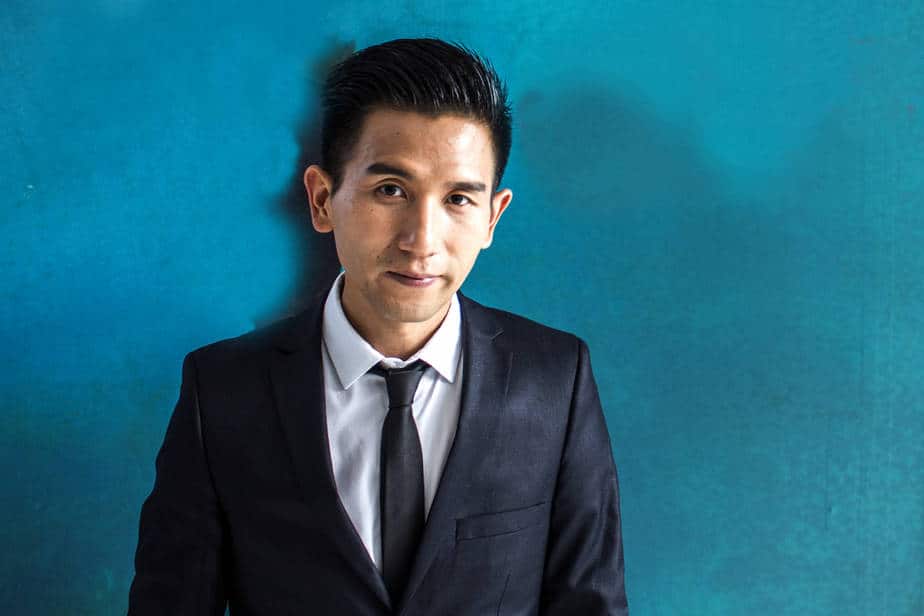
Midi Z Tribute
March 11, 2026 5 views
EntertainmentShoppingLocal NewsLifestyleReal EstateArtsHome GardenAutomotiveHealthDrug Crime
Born in Lashio, Myanmar, in 1982 and later relocating to Taiwan on a scholarship at the age of sixteen, Midi Z always seemed destined to inhabit an in between space, both geographically and artistically. That condition of displacement would become the emotional and thematic core of his cinema. A Myanmar-born, Taiwan-based filmmaker of Chinese descent, he consistently approached questions of migration, labor, poverty, faith, violence, and belonging not from the distance of sociological observation but from within lived experience.
His films, whether fiction, documentary, or the increasingly indistinct area in between, return again and again to people who survive at the margins of nations and systems, to those whose lives are shaped by borders, exploitative economies, and historical trauma. Over the years, his work screened at major festivals including Rotterdam, Berlin, Venice, Cannes, and Busan, while “The Road to Mandalay” won the FEDEORA Award at Venice and “Nina Wu” premiered in Un Certain Regard at Cannes, confirming him as one of the essential voices of contemporary Sinophone cinema.
What made Midi Z so singular, however, was never simply the importance of his subject matter. It was the way he filmed it. His cinema fused documentary immediacy with dramatic construction so seamlessly that the distinction often felt irrelevant. Long takes, handheld camerawork, non-professional or understated performances, and an unadorned visual realism became his signature, but within that realism lay an acute sense of beauty, melancholy, and moral complexity. Even when he later shifted modes, most notably with the psychological stylization of “Nina Wu”, his interest remained constant: how power scars the body and the mind, how people negotiate dignity in dehumanizing environments, and how memory turns suffering into narrative. To revisit his work in chronological order is to witness not just the evolution of a filmmaker, but the gradual expansion of a personal, political, and deeply humane cinematic universe.
“Return to Burma” from 2011 already contained most of the elements that would define the director’s career. Set against the aftermath of Myanmar’s contested 2010 election, the film follows a Burmese migrant worker returning from Taiwan to his village, carrying with him not only the ashes of a dead colleague but also the burden of disillusionment. The film unfolds as a quiet observation of rural hardship, stalled opportunity, and a youth increasingly convinced that the only future lies elsewhere. Rather than constructing conventional plot momentum, Midi Z allows the social texture of everyday life to emerge through conversations, pauses, songs, and long, patient sequences. The result is a debut that can feel loose in structure but is already remarkably lucid in its portrait of a country split between official rhetoric and lived despair.
With “Poor Folk” in 2012, Midi Z expanded his canvas and his ambition. The film interweaves two narrative strands, one centered on two Burmese refugees scamming tourists and drifting toward the drug trade, the other on a woman surviving through prostitution and trafficking near the border. If “Return to Burma” was about economic stagnation and the yearning to escape, “Poor Folk” moves into a darker register, showing the criminal economies that flourish when survival itself becomes precarious. The film’s realism remains central, but here it is enriched by a broader social architecture, one where poverty, migration, and exploitation are inextricably linked. The dual structure occasionally creates unevenness, yet the film stands as a crucial step forward, revealing Midi Z’s growing confidence in handling multiple viewpoints within the same ecosystem of desperation.
The 2013 short “Silent Asylum”, co-directed with Joana Preiss as part of the “Taipei Factory” omnibus, distilled many of the same concerns into only sixteen minutes. Framed through staged testimonies delivered by actors rather than actual refugees, the short addresses displacement, military violence, and the historical wounds of Myanmar with striking force. This decision to dramatize real experiences while maintaining a documentary texture is particularly revealing in retrospect, since it anticipates the hybrid mode that would become one of Midi Z’s defining strengths. The monologues, especially the one delivered by Wu Ke-xi, are searing in their emotional clarity, and the shifting perspectives of age, gender, and setting deepen the sense of collective trauma. If the final section veers toward abstraction, the short still functions as a powerful miniature, one that shows how fully Midi Z could conjure political history through voice, space, and performance.
In 2014, “The Palace on the Sea” offered yet another side of his sensibility. More enigmatic and impressionistic than his other early works, the short follows a woman moving through a ruined seaside temple while pleading to return home. The story remains deliberately elusive, but the emotional stakes are unmistakable. Longing, exile, and the impossibility of return are rendered not through exposition but through gestures, atmosphere, and the haunting interplay of architecture and ritual. Fan Sheng-xiang’s images give the abandoned temple an almost mythical quality, while the dance sequence at the center of the short suggests a temporary suspension of grief, a lyrical release in a body of work otherwise dominated by material hardship. Even when he embraced ambiguity, Midi Z remained tethered to the inner condition of the displaced.
That same year, “Ice Poison” marked a significant leap in formal and narrative precision. Following a young man and a woman named Sanmei as they drift toward drug trafficking in Lashio, the film again examines lives cornered by economic failure and social abandonment. Yet compared to the earlier features, “Ice Poison” feels more cohesive, more sharply controlled in the way each scene accumulates meaning. The documentary-like style persists, but the emotional bond between the two central characters gives the film a stronger dramatic spine. Wu Ke-xi and Wang Shin-hong are both excellent, embodying people who are neither romanticized victims nor sensationalized criminals, but simply individuals worn down by repeated betrayal. The title itself becomes emblematic of Midi Z’s cinema: intoxication and ruin as symptoms of a broader structural poison.
By the time he made “City of Jade” in 2016, Midi Z had fully embraced documentary while retaining the dramatic intensity of fiction. Following his brother in Myanmar’s dangerous jade-mining region, the film combines a personal family story with a portrait of labor, addiction, civil conflict, and shattered dreams. The production circumstances, including the confiscation of equipment and the use of GoPro cameras handed to miners, only intensified the film’s raw immediacy. Yet “City of Jade” is not valuable merely as reportage. Its achievement lies in the way it transforms harsh, chaotic material into cinema of astonishing visual power and emotional melancholy. The miners’ hopes, the omnipresent danger, the beauty of the ravaged landscape, and the painful rediscovery of a brother’s past all converge into a documentary that is at once intimate and political, unsparing and elegiac.
Also in 2016, “The Road to Mandalay” emerged as the film that definitively established Midi Z on the global stage. Centered on two Burmese migrants trying to survive in Thailand, the work sharpens many of his long-running themes into a devastating narrative of labor, legality, aspiration, and romantic imbalance. Lianqing wants to climb, to legalize her status, to enter a more stable life. Guo wants something smaller and more immediate, enough money to return home and open a shop. That divergence in desire becomes the film’s emotional fault line. What makes “The Road to Mandalay” so powerful is not only its realism, though that remains extraordinary, but its tragic understanding of how migration distorts intimacy. Love here is inseparable from precarity, and hope itself becomes dangerous when it is unevenly distributed. The film’s shocking conclusion does not feel imposed for effect, but like the terrible endpoint of a system that leaves no room for tenderness to survive.
“14 Apples” in 2018 returned to documentary territory, though once more in a form that complicates easy categorization. Based on the real experience of Wang Shin-hong, the film follows a businessman suffering from insomnia who retreats to a monastery and lives as a monk, surviving on one apple a day. What begins almost like a spiritual quest gradually turns into a measured examination of contemporary Buddhist practice in Myanmar, particularly its commercialization, contradictions, and uneasy relationship with poverty. Midi Z approaches the material with the patience of an observer but also the precision of an essayist, allowing scenes of ritual, conversation, and everyday absurdity to accumulate into a pointed critique. The pace is demanding, but the film is fascinating in the way it reveals how religion, labor, and social hierarchy intersect in daily life.
If much of Midi Z’s earlier cinema drew directly from Myanmar and its diasporic realities, “Nina Wu” in 2019 represented both a departure and a continuation. Co-created with Wu Ke-xi and centered on an aspiring actress confronting exploitation, trauma, and psychological fracture, the film shifted toward a more stylized mode, incorporating the grammar of psychological thriller and horror-tinged subjectivity. Yet beneath the formal change lay the same abiding concern with power and vulnerability. The film explores the predatory structures of the entertainment industry and the damage inflicted by the male gaze, while refusing simplistic victim narratives. Its premiere in Cannes’ Un Certain Regard marked a milestone in Midi Z’s career, and the film itself proved he could transpose his social concerns into a more constructed, visually elaborate register without losing emotional intensity.
Finally, “The Clinic” from 2023 feels in many ways like a summation of the docudramatic method Midi Z had been refining for years. The focus is a doctor couple in Yangon who run a low-cost neighborhood clinic while also pursuing artistic practices of their own. Through their work, the film opens onto a broader portrait of Myanmar between 2017 and the 2021 coup, touching on healthcare collapse, mental illness, ethnic tensions, corruption, and the aftershocks of political violence. What is remarkable is the film’s refusal to announce its significance. Midi Z does not lean on explanatory narration or overt didacticism. He simply observes, and by observing with such care, creates one of the most eloquent films about a society in crisis. The small clinic becomes a microcosm of a wounded nation, while the doctor couple emerge as figures of resilience whose commitment to care is itself an act of resistance.
Seen together, these films reveal a body of work of unusual coherence and compassion. Midi Z chronicled migrants, laborers, outcasts, dreamers, women under siege, men corroded by systems larger than themselves, and communities living amid the debris of history. He never treated these subjects as symbols. He filmed them as people, in all their frailty, compromise, longing, and stubborn humanity. That is why his cinema endures. It is not only a record of Myanmar, Taiwan, and the spaces between them. It is also one of the most piercing cinematic meditations of the last decade on what it means to survive when home, identity, and dignity are always under pressure.
Tags:14 ApplesCity of JadeIce Poisonmidi zNina WuPoor Folkreturn to burmaRoad to MandalaySilent AsylumThe ClinicThe Palace of the Sea
Original source
Read original article on Asianmoviepulse.com