
< BACK TO ARTICLES 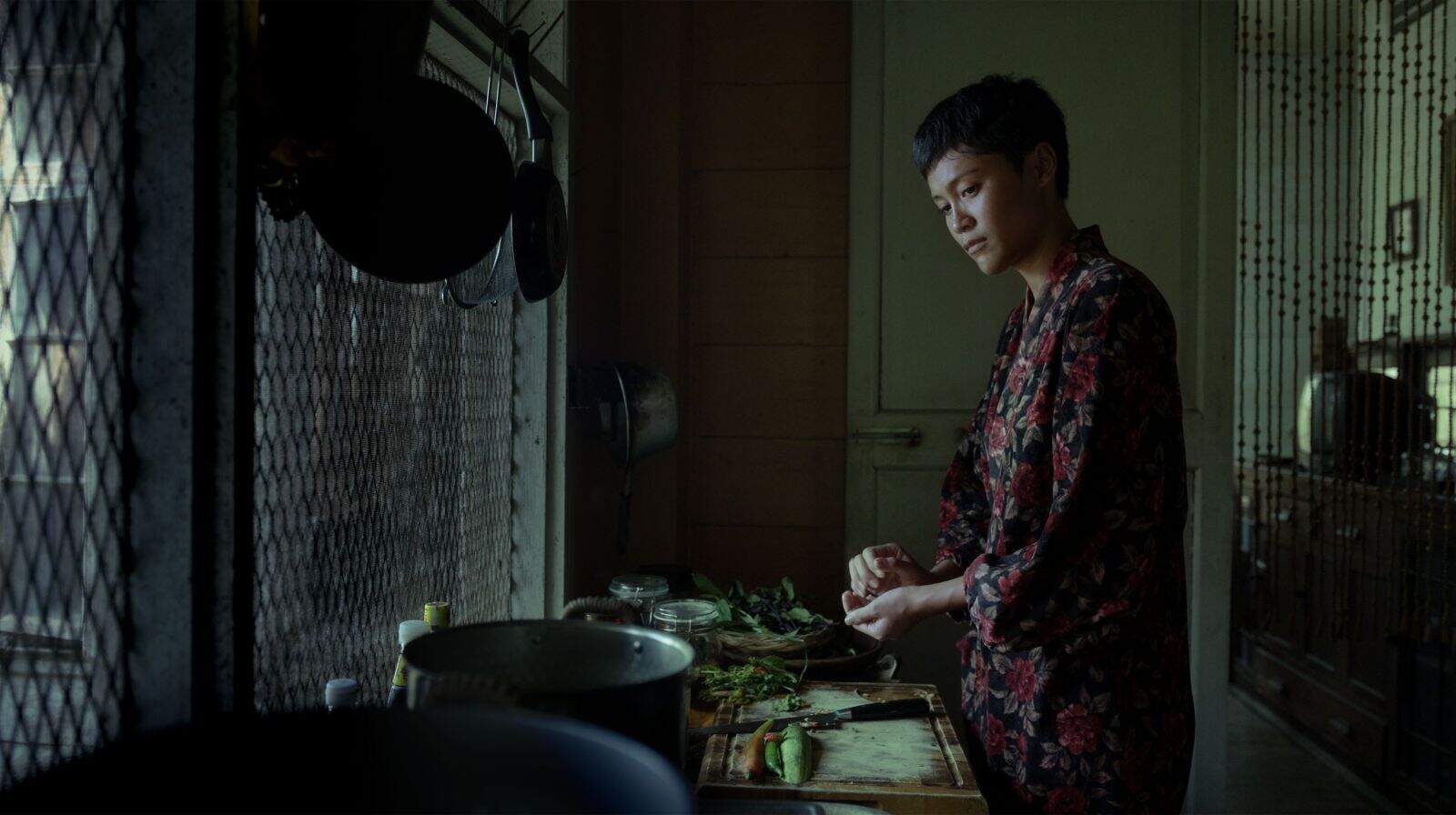
Morte Cucina (2025) by Pen-Ek Ratanaruang Film Review
March 17, 2026 1 views
FoodEntertainmentLocal NewsArts
It has been some time since we saw a Pen-Ek Ratanaruang movie, with the Thai filmmaker’s last endeavor being the 2017 “Samui Song”. In 2019, however, he directed one of the episodes of the Eric Khoo-helmed series “Food Lore” and “Folk Lore”, and their combined aesthetics and narrative, focusing on food and horror or thriller elements, seem to have inspired him in crafting his latest work, which also deals with the culinary, “Morte Cucina”.
Morte Cucina is screening at Helsinki Cine Aasia
Sao, exiled from her traditional Muslim countryside community as a teenager, has come alone to the city and now leads a fulfilling life as a chef at a high-end restaurant in Bangkok, respected by friends and colleagues. Eventually, however, Korn, the man responsible for her ostracization, appears as a customer in the restaurant, without even recognizing her. Sao decides to take revenge using her culinary skills, and soon has Korn eating from her palm, both literally and metaphorically.
Ratanaruang directs an intricate work, which unfolds through two parallel stories, with the past presented as flashbacks through the present, the main axis, while the final part moves the narrative into a more rural and bucolic setting, adding yet another layer to an already impressive structure. The first part, set in the past, is quite socially conscious, as a young girl, who is eventually revealed to be a victim rather than a perpetrator, finds herself accused by her community, particularly the spiritual leader, with characterizations such as “whore” being used carelessly. The critique of such small Muslim communities is palpable, as the treatment of a girl who actually needed support proves deeply disturbing to witness.
The second part, which also functions as the main one, is arguably the most impressive. As we watch Sao slowly executing her revenge, which becomes increasingly apparent, using her exquisite cooking skills, a sense of sensualism emerges, deriving both from the presentation of the dishes and from the inclusion of sex scenes, a relatively rare element in Thai cinema. The approach to these scenes is particularly interesting in its contrast, as Sao clearly uses sex as a weapon, without genuinely desiring Korn, while the physical presence of Thanatphon Boonsang maintains an atmosphere of sensuality. Furthermore, a later and much more unusual scene adds another layer to the ambiguity of what eroticism means for her.
At the same time, the concept of food is implemented in multiple ways. Sao, who found solace in cooking after her ostracization, eventually builds a stable life through it, essentially elevating it to something almost sacred. However, as she also uses it as a tool for revenge, this duality becomes central to the narrative. The way Christopher Doyle captures the dishes, rendering them visually exquisite, adds further complexity, highlighting both their beauty and their darker implications.
The Tadanobu Asano arc, in which he appears as a peculiar artist invited by a local gallery, adds to the ritualistic and perversely artful approach of the story. However, this subplot is not always organically integrated, occasionally feeling somewhat disconnected, even though it contains some of the most memorable lines, underlining the overall quality of the writing.
The final part is perhaps the most shocking. As Sao’s revenge reaches an extreme point, the narrative takes an even darker turn, which ultimately works very well, particularly because her mentality regarding her actions has shifted, thus avoiding any glorification of revenge.
M.L. Pattamanadda Yukol’s editing brings all these elements together effectively, with the interweaving of the different arcs and the steady pace, which remains deliberate but never slow, standing out as key strengths. Christopher Doyle’s cinematography is superb once more, shaping “Morte Cucina” through distinct visual textures that mirror its dual narratives. The teenage girl’s storyline is captured on grainy 16mm, emphasizing brutality, guilt, and emotional weight. In contrast, the revenge arc adopts a colder, monochromatic look, dominated by artificial neon lighting across Bangkok’s urban spaces. As the setting shifts north, the palette turns to diffused greens, filtered through mist and rain, reflecting uncertainty. This gradual visual transformation reinforces the protagonist’s psychological journey from trauma to doubt.
Lastly, the natural sound design by Akritchalerm Kalayanamitr, particularly the sounds of food being chopped, cut, sizzled, or chewed, creates a rich auditory texture within which the story unfolds in a meaningful way.
Thanatphon Boonsang delivers an impressive performance as Sao, a true femme fatale, with the contrast between her outward submissiveness and hidden intentions being one of the most compelling aspects of the work. Kris Srepoomseth as Korn is also convincing in his gradual unraveling, while Tadanobu Asano once more exudes his trademark charisma.
“Morte Cucina” is an excellent work, one that takes food into paths rarely explored with such eloquence, and another testament to Ratanaruang’s prowess as a director.
Tags:Christopher DoyleHelsinki Cine AasiaKris SrepoomsethMorte CucinaPen-ek RatanaruangTadanobu AsanoThanatphon Boonsang
Original source
Read original article on Asianmoviepulse.com