
< BACK TO ARTICLES 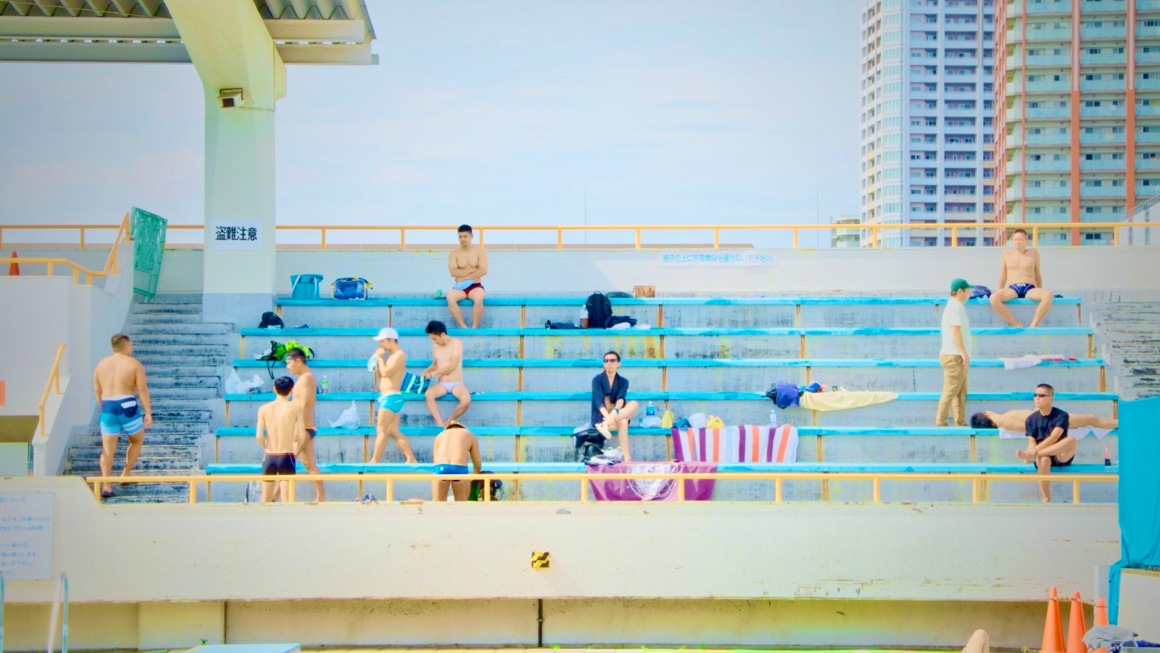
Numakage Public Pool (2026) by Shingo Ota Documentary Review
March 8, 2026 10 views
EntertainmentLocal NewsLifestyleRecreationReal Estate
At first glance, a public swimming pool may seem like an ordinary recreational space, yet in Japan these places often function as vital social and cultural hubs. Particularly during the sweltering summer months, municipal pools bring together people of all ages, from children learning to swim and teenagers gathering with friends to elderly residents seeking exercise and relief from the heat. Rooted in broader traditions of communal spaces and collective discipline, the public pool becomes more than a site of leisure, reflecting the rhythms of daily life, the values of community, and the subtle rituals that shape Japanese society. “Numakage Public Pool” captures one such space during a moment of transition, documenting the impending demolition of a beloved suburban pool and the emotional response of those who have long considered it a second home.
Numakage Public Pool is screening at Thessaloniki Documentary Film Festival
Located in Tokyo’s Numakage neighborhood, the pool affectionately nicknamed “the ocean” had served the local community for over fifty years. What began as a municipal facility for exercise and recreation gradually evolved into a unique social hub. Children learned to swim there, elderly residents maintained their health through daily laps, and members of the local gay community found in it a discreet meeting point where friendships and relationships could flourish. When city authorities announced plans to demolish the complex as part of a redevelopment project that will include the construction of a new school, the decision triggered a wave of grief among residents who felt that far more than a recreational facility was about to disappear.
“Numakage Swimming Pool” chronicles the final months of the facility’s existence, structuring its narrative around the five stages of grief: denial, anger, bargaining, depression, and acceptance. At first, regular visitors struggle to comprehend that the space they have known for decades will soon vanish. Elderly swimmers voice disbelief that the city would erase a place so integral to their daily routines, while others attempt to mobilize resistance. Community meetings unfold as residents question the municipality’s claims that no alternative solutions exist, presenting their own examples of possible compromises that could preserve the pool.
Gradually, however, the emotional spectrum broadens. Ota introduces a variety of figures who collectively embody the life of the facility. Elderly women speak with genuine affection about how the pool has kept them healthy and socially active. Lifeguards diligently watch over the swimmers during the sweltering summer heat, occasionally intervening when someone suffers heatstroke, while their morning ‘reports’ essentially function as the anchor for each chapter here.
Children finish long afternoons in the water before heading to the nearby candy shop, capturing the pool’s role in shaping neighborhood childhoods. Meanwhile, the camera observes small eccentricities that lend the documentary an unexpected humor, from a man rubbing olive oil on his body before swimming, to casual conversations about spotting attractive swimmers around the pool. Regarding the last aspect, the involvement of the police with a man who came to the pool just to peep, highlight the fact that not everything is idyllic, in a testament to the realism permeating the documentary.
Among the more intriguing threads is the pool’s importance to the local gay community. What initially appears as a playful subplot, involving an obese man (the aforementioned who rubbed oil actually) and a middle aged man who likes ‘big men’ eventually becomes one of the key chapters of the movie, as we see the two coming closer, with the former even visiting the house of the latter, where he lives with his elderly mother.
Beyond these personal stories, the documentary situates the pool within a broader context of urban change. Tokyo’s relentless redevelopment has repeatedly transformed neighborhoods, often erasing spaces that once fostered community bonds. In this sense, the film becomes an elegy for the idea of public space itself. The residents’ struggle to preserve the pool reflects a growing tension between municipal planning and the emotional attachment people develop toward everyday environments.
Technically, Ota adopts an observational approach that allows these stories to unfold organically. The cinematography often favors close shots of what is happening in the space of the pool, while the speech of the man in charge close to the end highlights how the camera approaches emotion. At the same time, that the focus is also on various individuals, again with the camera following them quite closely, results in a series of intimate shots. All the while, the panoramic shots of the pool are the most impressive ones, and among the ones that will definitely stay on mind.
The editing reinforces the film’s thematic structure, gradually transitioning between the five emotional stages of loss while weaving together multiple personal narratives. Humor and melancholy coexist throughout, particularly in sequences where slow-motion shots of swimmers are accompanied by carefully chosen musical cues. These moments occasionally border on playful exaggeration, yet they ultimately enhance the bittersweet tone that permeates the documentary.
“Numakage Swimming Pool” is an excellent documentary, one that highlights a specific phenomenon while putting it into a wider context, while also focusing on individuals, whose stories, though, echo far beyond the neighborhood the doc takes place in.
Tags:Numakage Public PoolShingo OtaThessaloniki Documentary Festival
Original source
Read original article on Asianmoviepulse.com