
< BACK TO ARTICLES 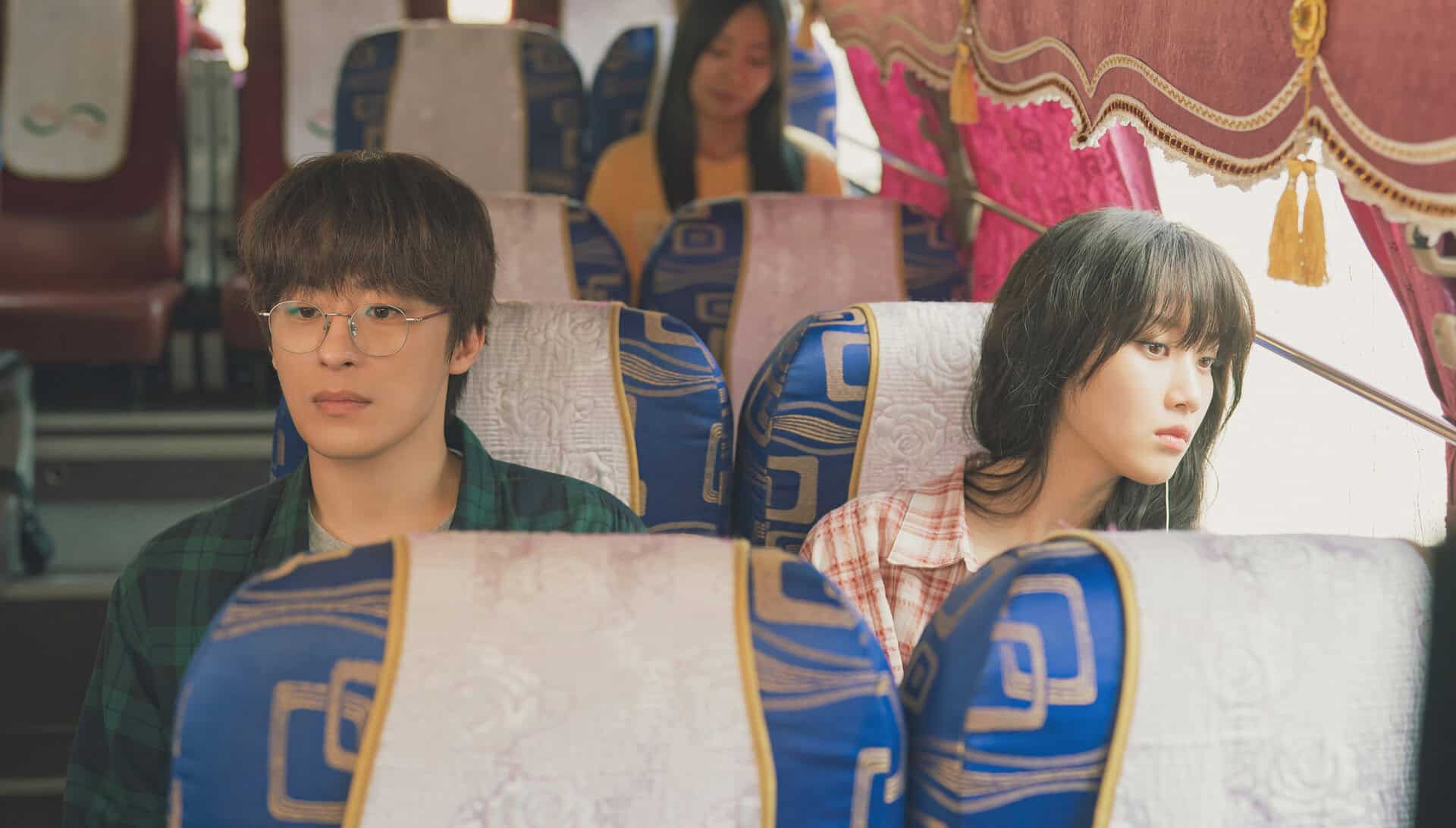
Once We Were Us (2025) Bi Kim Do-Young Film Review
April 30, 2026 1 views
EntertainmentEducation
The lead of “Once We Were Us”, the South Korean adaptation of the 2018 Chinese popular romance “Us and Them”, has been placed in the capable hands of director, writer and actress Kim Do-young, who in 2019 brought to the screen the bestselling “Kim Ji-young, Born 1982”. The film went on to become one of the most successful titles of the year in Korea and internationally, thanks to Kim Do-young’s command of the narrative and the gentle assertiveness she achieves. Expectations are therefore high for her treatment of a story that has already proved both compelling and heart-wrenching.
Once We Were Us is screening at Udine Far East Film Festival
While boarding a plane bound for Seoul, the eyes of Eun-ho (Koo Kyo-hwan) and Jeong-won (Mun Ka-young) meet. They know each other well, having once been a couple, now long estranged. When the plane is forced to disembark due to bad weather, they spend the night revisiting the past, as a series of extended flashbacks unfolds for the audience.
Ten years earlier, they had also met by chance, on a bus to their hometown. Eun-ho was a university student at the time, dreaming of becoming a game designer, while Jeong-won longed to become an architect. Carefree and with their heads full of grand ambitions, they became friends, and Jeong-won, who had spent her childhood in an orphanage, grew fond of Eun-ho’s widowed father (Shin Jeong-geun). They moved in together to minimise expenses, and their friendship soon turned into love and passion. They sincerely supported and understood each other’s dreams, yet life in Seoul proved unforgiving for young students, and after university they had to go the extra mile to pay the rent, while their aspirations felt increasingly out of reach. Now, ten years on, they remain haunted by the lingering echo of … “what if”.
Within minutes of the start of “Once We Were Us”, we already know the ending. We know it’s a story that didn’t work out and prepare ourselves for the worst, but nevertheless—and perhaps because of it—we are glued to our seats, waiting for the moment when everything begins to crumble, trying to understand why it did. And it’s a compelling ride. The love story opens with an exhilarating, childlike sense of freshness and honesty: funny, tender, clumsy and unvarnished. However, before our very eyes, life slowly unravels, laying down its patina of rust and disillusion over the protagonists’ resilience.
The sad moral of this is that love is made up of an infinite number of variables, often failing to align despite the strongest premises. Young, exuberant love, when it falters, seems to have a devastating impact on emotionally fragile and ill-equipped souls, and the inevitable coming of age proves as painful as it is necessary. A touch of social commentary surfaces here, as young, provincial Jeong-won and Eun-ho struggle with inhumane working conditions, economic hardship, a housing crisis, and the harsh, alienating reality of big-city Seoul during a national recession.
The film relies heavily on dialogue and rests firmly on the shoulders of its two leads, both terrific in the roles of Jeong-won and Eun-ho. The passage of time and the shifting dynamics between them are convincingly portrayed through a careful balance of performance, direction and production design. The use of black and white for the present day and colour for the flashbacks is a functional, if somewhat obvious, device to differentiate the decades, though a precise rationale for this choice is eventually revealed later on. Director Kim Do-young succeeds in avoiding, or at least not coming dangerously close to, genre stereotypes, as classic tropes are handled with restraint. However, the film feels somewhat overstretched towards the end; it could probably have concluded earlier, leaving out an unnecessarily soppy coda. That said, the Korean adaptation makes welcome cuts to the source material, improving its overall flow.
All in all, and despite some minor flaws, “Once We Were Us” is a surprisingly gripping and compelling experience, one that may also appeal to audiences not particularly keen on romance, thanks to its honest dissection of the harsh realities of love in the real world.
Tags:Kim Do-youngKoo Kyo-hwanMoon Ga-youngOnce We Were UsShin Jeong-geun
Original source
Read original article on Asianmoviepulse.com