< BACK TO ARTICLES 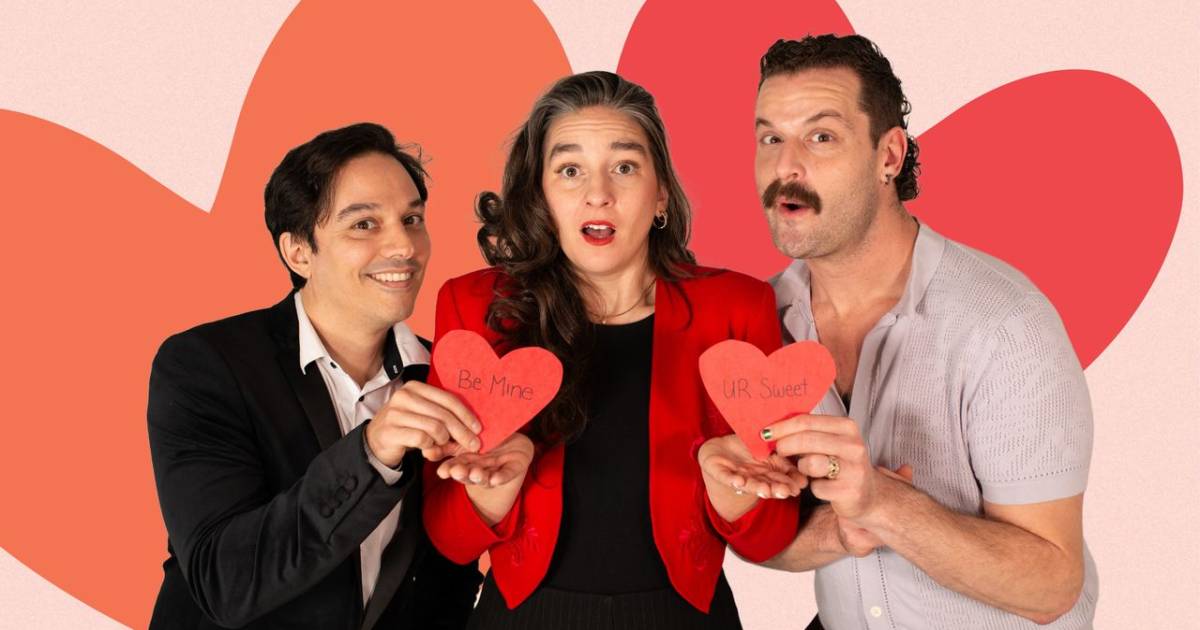
Q&A: The Improv Centre's Alan Pavlakovic talks missed connections and urban yearning | Georgia Straight Vancouver’s source for arts, culture, and events
March 9, 2026 7 views
Lifestyle
1 of 1 2 of 1 Get the best of Vancouver in your inbox, every Tuesday and Thursday. Sign up for our free newsletter.Long before swipes, likes, and algorithms turned dating into a thumb sport, there were missed connections: a glance on the bus, a moment in a grocery aisle, a stranger who stuck in your head just long enough to write a note into the void.For years, the Straight’s I Saw You column gave those moments a strange afterlife—part confession booth, part urban poetry, part social experiment.Now, for the second year, the Improv Centre has turned that format into a live show, using real posts as the spark for improvised scenes shaped by audience suggestions. The result is funny, a little awkward, and surprisingly revealing.The Improv Centre’s creative director Alan Pavlakovic spoke with the Straight about anonymity, awkwardness, and why missed connections still matter.GS: The show draws from our I Saw You column. How do you reinterpret that material on stage?Pavlakovic: The way we've structured it is that a lot of the scenes start by us legitimately reading one of the "I Saw You" posts.I scrubbed the website and found all sorts of interesting little stories and meet-cutes, and we use those as a springboard. Often, people mention a form of transportation, where they were shopping, or what part of the city they were in, so we extrapolate out from there.Then we ask the audience questions like: what would be a defining feature that would catch your eye? What's a place that's your haunt? We start blending the real missed connections with ideas from the audience that night, and that becomes the basis for creating a scene from scratch.So we're not just replaying people's stories. You can go to the website and read those. We always want to put a twist on it and add our creativity. It becomes a marriage between the written word and whatever we invent on stage. GS: Do certain kinds of entries surprise you or recur in interesting ways?Pavlakovic: I'm often surprised by the amount of detail people put into these missed connections. Some are only a couple of sentences long, but some are a full paragraph and really detailed.One thing I love is that people include little "skill-testing questions." They'll write something like: we were on the same bus, tell me what flowers I was carrying so I know it's really you. Or tell me what was on my T-shirt.We'll reinterpret those as prompts for the audience. One entry described someone as a "plump goth goddess," which we thought was brilliant. We asked the audience for two descriptive words and ended up with something like "juicy temptress." That became the inspiration for a scene set in a regal court where someone was feeding their queen grapes.So something very realistic and modern can suddenly become a completely different world.GS: Does the show reveal anything about Vancouver itself?Pavlakovic: Absolutely. The posts give us bus numbers, locations, and neighbourhoods around the city. Because we're actors who live and work here, those details are inspiring.What's also nice about I Saw You is that it shows the warmth of Vancouver. I have friends from Winnipeg, Toronto, Halifax, and Montreal who say it's hard to make friends here or start conversations. But if you look at the people writing these posts, they're open to communication. They're open to possibly going on a date.It shows the humanity and vulnerability of someone putting themselves out there, even anonymously, in the hope they might get a response.GS: Has working with these posts changed how you see missed-connection culture?Pavlakovic: I actually find it fascinating. In queer culture, there's long been a cruising culture and various ways people signal interest or try to make connections. Over time, some of those systems got repurposed into things like dating apps: Tinder, Hinge, and so on.To me, the I Saw You format is one of the purest forms of that. It's a way to put yourself out there and start a conversation.And when you think about the last five to 10 years, especially during COVID, people weren't meeting in bars or social spaces. We're still recovering from that. Many places that used to sell out every weekend still aren't back to those numbers.So for some people, a column like this might actually be one of the only ways they feel comfortable reaching out.GS: Do you see theatre like this as part of the post-pandemic social recovery?Pavlakovic: I think that's exactly right. COVID wasn't something that happened and then ended. We're still relearning how to interact in groups and social situations.But there are silver linings. People are cleaner, they wash their hands more, they carry sanitizer. You try to find some humour in trauma, that's how comedians cope.There's also a whole group of people now in their mid-20s who missed formative social years. They didn't have those casual moments where you meet someone across a room.So something like I Saw You, and a show that brings that idea onto the stage, becomes part of that healing. It reminds people that making connections, even awkward ones, is still possible.Tickets for the final four I Saw You shows are available here. Join the discussion Facebook comments not loading? Please check your browser settings to ensure that it is not blocking Facebook from running on straight.com
Original source
Read original article on Straight.com