
< BACK TO ARTICLES 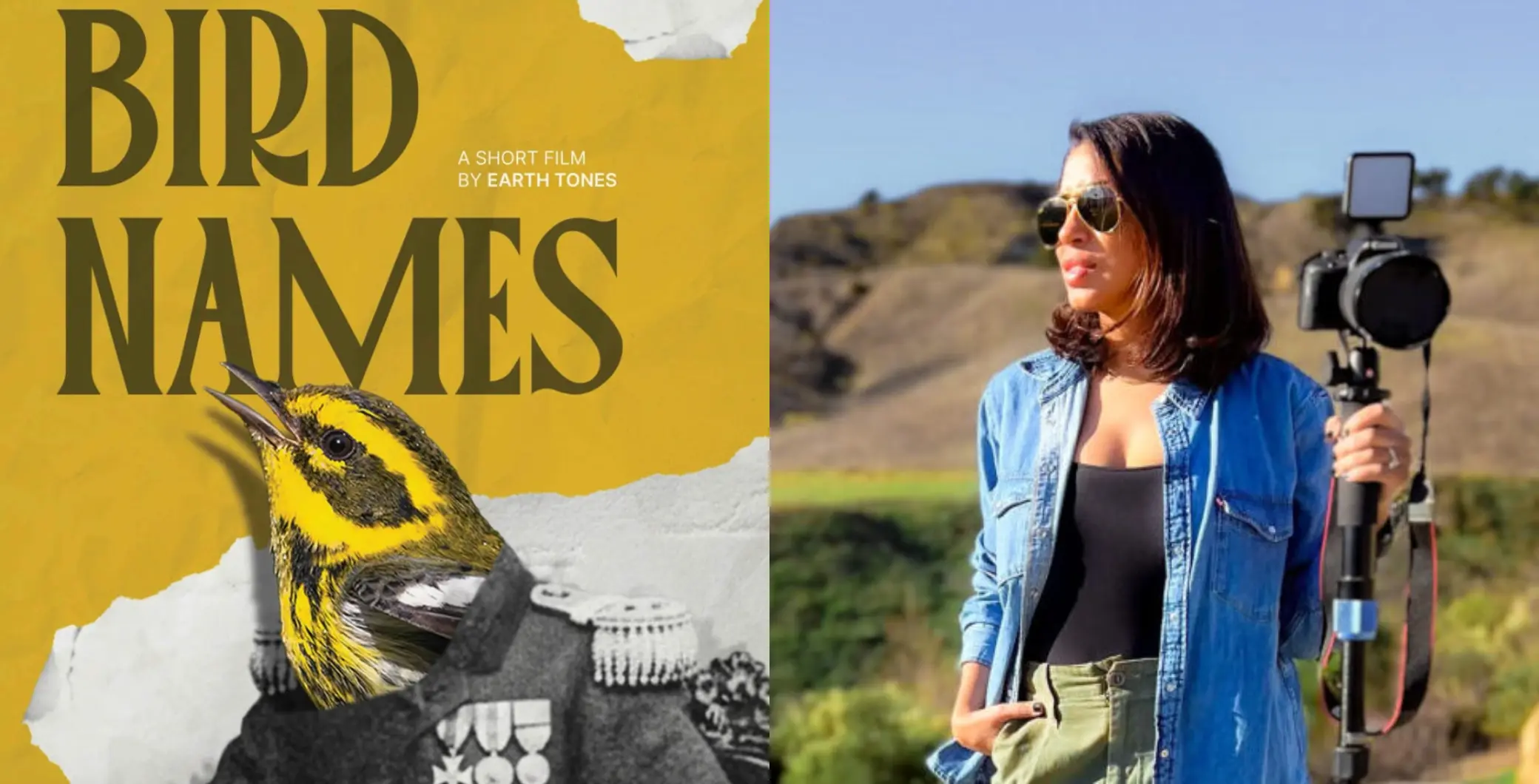
Should birds named after racists get new names? Canadian filmmaker Aliya Jasmine explores the debate in new CBC doc - NOW Toronto
March 15, 2026 4 views
EntertainmentPoliticsEnvironment
The 22-minute documentary by Aliya Jasmine's co-founded production company Earth Tones, part of CBC’s Short Docs series, premiered on March 12. (Courtesy: aliyajasmine/Instagram)
Facebook
Twitter
Reddit
Copy current article link
What to know
A new CBC documentary, Bird Names, explores a growing movement to rename North American birds named after historical figures linked to racism and colonialism.
The film by Canadian environmental journalist Aliya Jasmine follows birders on Vancouver Island while examining the debate around changing long-standing species names.
The discussion gained momentum after the American Ornithological Society announced in 2023 that nearly 150 bird species named after people would be renamed.
Beyond naming controversies, the documentary also highlights declining bird populations and the push to make birding more inclusive and accessible.
A new documentary now on CBC created by Canadian host-turned-environmental journalist Aliya Jasmine is asking viewers to look at birds — and their names — a little differently.
Bird Names examines a growing movement within the birding world to rename dozens of North American species whose names honour historical figures linked to colonialism and racism.
View this post on Instagram A post shared by ALIYA JASMINE (@aliyajasmine)
The 22-minute documentary by Aliya Jasmine’s co-founded production company Earth Tones with sister Aliza Sovani, part of CBC’s Short Docs series, premiered on March 12. Led entirely by an all-Canadian, BIPOC and queer film crew, it blends wildlife cinematography with storytelling from real-life birders to explore how the names we assign to nature can shape inclusivity in the great outdoors.
Aliya Jasmine told Now Toronto earlier this week that Bird Names centres on the American Ornithological Society’s 2023 decision to rename nearly 150 bird species — a move partly sparked by the racial justice uprising following the 2020 murder of George Floyd in Minneapolis, which prompted widespread calls across Canada and the United States to reconsider the names of institutions, sports teams, streets, and other places tied to controversial historical figures.
Advertisement
Read More
The debate is over! Toronto council moves forward with renaming Yonge-Dundas Square as Sankofa Square
New TMU Station signs go up as TTC formalizes renaming of former Dundas Station
“We haven’t really seen this kind of huge change of scientific names in the nature space since the dawn of Western civilization. This is a huge deal to change all these bird names, and for birders who spend their lives memorizing all these complicated names and all these books, it’s not a small promise,” she explained. “And what the film looks into is why does that matter?”
Some of the birds highlighted in the film include the Scott’s Oriole, named after Winfield Scott, a significant leader in the War of 1812 who committed genocidal attacks against Indigenous peoples; the Bachman’s Sparrow, named for slave owner John Bachman; and the Hammond’s Flycatcher, named after William Alexander Hammond, a military physician known for collecting the skulls of non-white individuals to promote racist scientific theories about human hierarchy.
But the film’s journey through Vancouver Island hones in on the search for the elusive Townsend’s Warbler, the first bird expected to receive a new name as part of the initiative. The small yellow and black songbird is named after ornithologist John Kirk Townsend, who’s been recognized as a grave robber, known to have stolen Indigenous people’s skulls to affirm his own racial bias.
“The guy it’s named after is, to be quite frank, an asshole,” Aliya Jasmine laughed. “And so, we wanted to see this little bird who has this really heavy, horrible name attached to it for ourselves.”
Accessible names can support better conservation
Beyond the debate over names, Aliya Jasmine says the film also speaks to a larger issue: bird conservation. She explains that bird populations are declining at alarming rates across the continent, and conservationists are currently facing a major challenge: getting more people to care about protecting them.
Advertisement
“You are stopping an entire step of the population from caring about birds if you’ve named them after slave owners and racists. Like what you’re saying is that an entire part of the population is not welcome into this space,” she explained. “Seeing the joy [birds] bring to a child and then realizing that the bird we just saw is named after somebody who literally hated people who look like me and who look like my two-year-old — that is a horrible feeling.”
She emphasizes the absence of birds can fundamentally change how an environment feels, noting that the presence of the animals are a sign of a healthy ecosystem. Aliya Jasmine says the documentary is meant to encourage more people to connect with birds, the most crucial step toward protecting them, and that all begins with making birding more accessible.
“I think that the answer to saving our bird population and helping wildlife is to make birding more open and inviting to more people outside of the stereotypical, quintessential birder,” she said. “Who’s gonna remember the name Townsend Warbler? It actually doesn’t mean anything to 99 per cent of people. If you call that bird ‘Yellow Bird’ the way that we have Blue Jay or Woodpecker, if it was a descriptive word, people would remember it, and you’re lowering the barrier to entry into birding, and more people will be able to enjoy it.”
Now out for the world to see and form their own opinions, Aliya Jasmine says her hopes for how the film is received are two-fold: she invites longtime birders to reflect on why the issue matters, while also hoping it opens the door for newcomers to discover an interest in birding and nature.
“I really hope that for many people of colour who have not historically felt invited into these natural spaces, that they watch this film and it’s a permission to fall in love with nature on your own account, and to feel welcome and to be excited about this space,” she shared.
“I really, really hope more people get excited about birding, because I think birding is a really great access point to the natural world. Even just noticing nature and realizing that nature and the things that we experience every day — that we take for granted — have such a profound impact on our lives.”
Advertisement
Bird Names is available to stream across Canada on CBC Gem and on YouTube.
Janiece Campbell
Advertisement
Twitter
Tiktok
Instagram
Youtube
Facebook
Threads
Blue Sky
Follow us @nowtoronto
Advertisement
What’s Trending
Posted 4 days ago Katy Perry dropped new photos with boyfriend and former Canadian prime minister Justin Trudeau — and people are reacting
Posted 4 days ago ‘It’s alarming,’ Hamilton man claims Tim Hortons reused a cup for his order
Posted 3 days ago ‘I will not tolerate slum lords,’ Mayor Olivia Chow introduces motion to crack down on bad Toronto landlords
Advertisement
Original source
Read original article on Nowtoronto.com