
< BACK TO ARTICLES 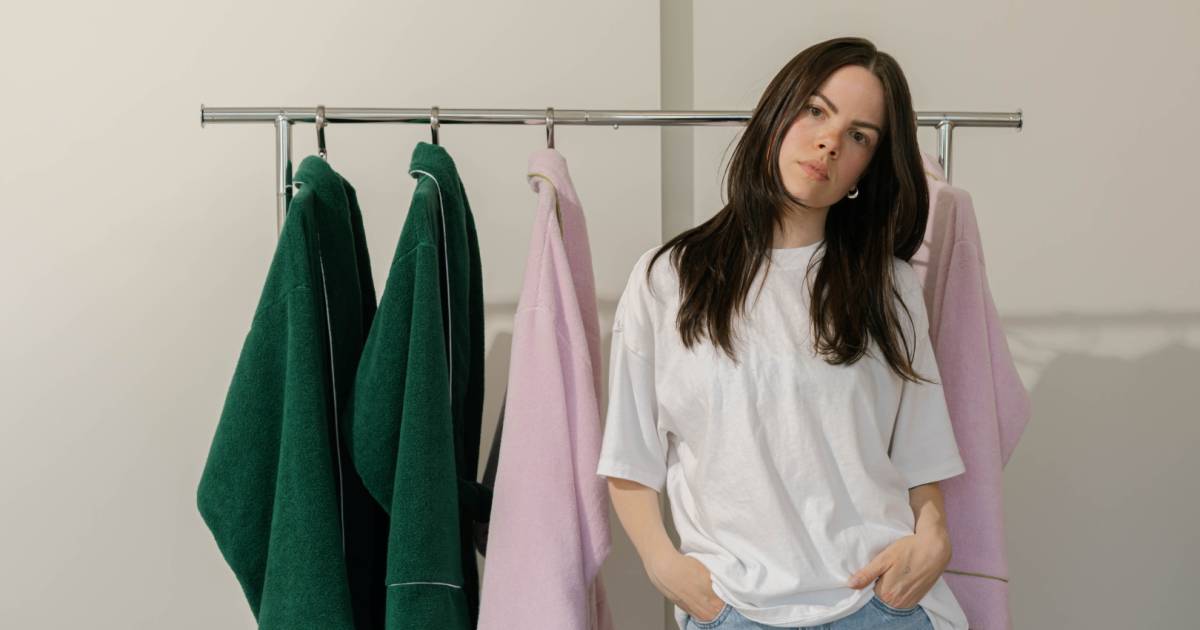
The joy of playing Hooky in a housecoat | Georgia Straight Vancouver’s source for arts, culture, and events
March 12, 2026 6 views
FinanceLifestyleReal Estate
1 of 2 2 of 2 Get the best of Vancouver in your inbox, every Tuesday and Thursday. Sign up for our free newsletter.Janine Felst did not set out to become a robe evangelist. She was just trying to avoid becoming “idle” during the pandemic.After selling her previous venture, a vegan doughnut company, Felst found herself staring down pandemic life and thinking hard about what kind of business she actually wanted next. Food, she says, was relentless.“You’re always making stuff, replenishing,” Felst tells the Straight. “You don’t have anything just sitting on a shelf, waiting to be sold.”This time, she wanted something shelf-stable. Something that did not expire in 24 hours.Enter the robe.At the time, housecoats were quietly dominating the internet.“All the influencers were wearing housecoats,” Felst recalls.“They were doing get-readies. And I thought, ‘This would be easier.’ ”She initially flirted with online marketplaces before realizing the math did not make sense.“There’s no money in it. Seller fees are astronomical,” she says. “I realized that I should just sell direct to consumer.”And thus, housecoat brand Hooky was born.Hooky began with blanks (unbranded garments) ordered from overseas, stacked in her garage next to the usual suburban chaos.“They sold so quickly,” she says of the first striped plush robes. “I sold out two times within six months. I ordered 200 robes and sold them immediately.”But success with blanks comes with an expiry date.“People started catching on,” Felst admits. “They knew they could find something similar online at a more competitive price point.”Then came the commentary: polyester, pricing, not Canadian.“Those outside voices got to my head very quickly,” she says.So Felst resolved to “give the people what they want”. She pivoted to sourcing cotton and working with a local sewist in the Lower Mainland. The new robes were made in B.C., thoughtfully designed, and priced accordingly. The feedback improved, though Felst noticed a familiar pattern.“A lot of those people that asked for those changes never bought a robe,” she says.Meanwhile, others missed the stripes she had ditched. It was her first lesson in founder psychology.“Do I listen to the outside voice, or do I just make a product that I want to make?” she says. Iulia Agnew Money, of course, was always the backdrop. Felst started Hooky with $5,000 and no safety net.“I have $5,000,” she says. “That’s it. I have no other money. I don’t have a job. I’m not using a line of credit. I’ve been like that since day one.”Just as the brand hit its first-year mark and holiday momentum was building, production fell apart.After placing a pre-Christmas order, Felst received an email from her sewist ending their professional relationship with no warning.“I was confused, and, I’ll admit, hurt,” she reflects. “I felt like I was just starting to gain momentum.”The fallout was part emotional, part logistical.“Somebody that I thought really believed in me… all of a sudden just dropping me, was hurtful.”Then came the fabric problem. “We’re talking two-foot-long rolls… giant fabric rolls, that I now have to get out of her house. Awkwardly.”Felst hauled everything home and started over. She reached out to multiple Vancouver sewists.“I was like, ‘This is my situation—can you help me? How fast can you help me?’ ” she says.The answer was not immediate. Switching manufacturers meant rebuilding her technical package from scratch.“That takes a month,” she says. “And money, big money.”The silver lining? A better robe. And working with a more experienced sewist allowed her to refine the fit and finish.“The collar is much more plush and luxe,” Felst shares. “The bottom of the robe doesn’t lie open—it stays shut. The sleeve length got updated, shoulder seams got updated. It’s miles ahead.”To manage costs, she reduced the number of size breaks while maintaining inclusivity.“It still fits from a small to a 2X, but we just do three sizes now,” she says.Hooky’s evolution is not just technical. It is philosophical. The name itself hints at the brand’s ethos.“The arrow on the Y is meant to be the devil’s tail,” Felst says of the logo.Hooky, she explains, is “technically supposed to be the devil on your shoulder like, ‘Hey, just skip. Just cancel. It’s fine.’ ”She frames the robe as a self-care cue rather than just bath attire.“Just put the robe on, and then see how you feel,” she says, “if you can decide to slow down.”Felst is candid about who she is speaking to: “The overworked person… the person that doesn’t know how to slow down.”In a culture obsessed with productivity and hustle, she sees the robe as a form of permission.“Running on high all the time is not healthy,” Felst offers as advice. “Life is happening right now… put it on, slow down, sit down, enjoy your coffee. Just chill.”For now, Hooky remains direct-to-consumer and founder-led. Retail is possible, but only if it aligns.“The margins of going wholesale… it would have to be, like, a kick-ass retailer,” she says.In other words, Hooky is still growing up. But if Felst has her way, it will grow without losing its central thesis: sometimes the “bad” voice telling you to rest is actually the smart one. Join the discussion Facebook comments not loading? Please check your browser settings to ensure that it is not blocking Facebook from running on straight.com
Original source
Read original article on Straight.com