
< BACK TO ARTICLES 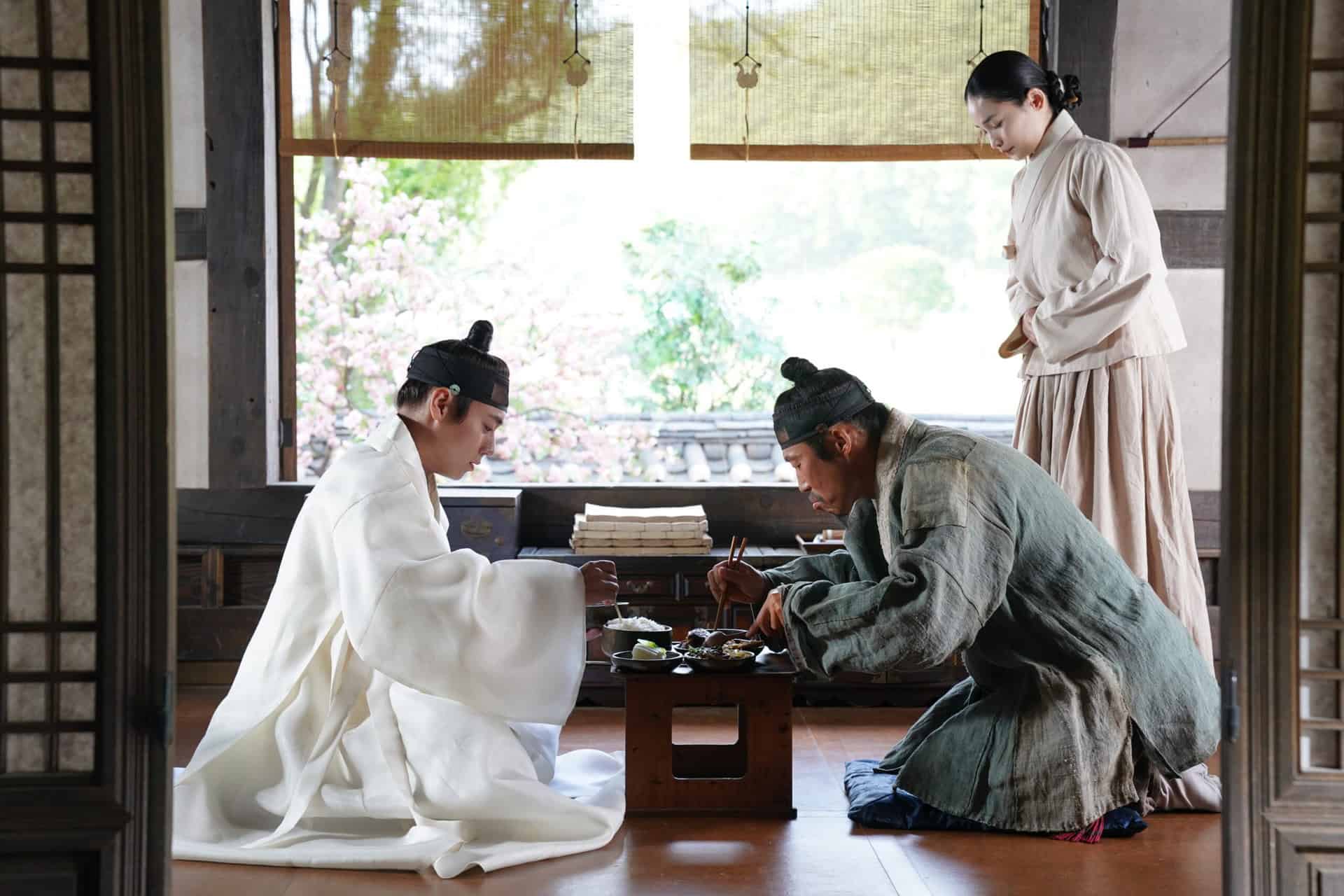
The King's Warden (2026) by Jang Hang-jun Film Review
February 28, 2026 27 views
FoodEntertainment
There is quite a charm and innocence about the historical dramedy “The King’s Warden”. These are not epithets that one would associate with an ambitious period movie, which is supposed to rely on lofty themes, grandeur, spectacle, and pathos. What is admirable is that, despite having all the ingredients in place for a story that could easily be manipulative and formulaic, it chooses to value simple emotions that audiences will easily relate to. It is hard not to be swept up in the storytelling as the film progresses.
The plot is simple enough, but it is not in the story, rather in the telling of it, that it excels. A banished king, after losing his father-in-law and faithful courtiers, is sent to a remote island for exile and “repentance,” only to come in contact with a colourful village warden and his group of good-natured villagers, who nurse the young king back to health, physically and otherwise.
Although the plot involves coups, a rebellion, and plots against kings, what comes as a pleasant surprise is that the film is largely a comedy, and a good-natured, light-hearted one. The situation is not amplified; the drama is kept light, and its humour is often at the expense of the characters. Yet this does not belittle them, but rather humanises them further.
Foremost among them is the character of the village warden, played with a goofy charm by Yoo Hae-jin. For a 15th-century village headman, the character seems oddly relatable. He is a man of many humanistic contradictions, one that is plausible and recognisable in people around us. While he is the one who takes the lead in bringing a nobleman to his village to change its fortunes and guide it into prosperity, he barely lifts a finger to volunteer in the work himself, much to the ire of the villagers, who are made to work hard.
When bringing food to the boy king, he lists the names of the villagers who prepared each dish but insists, more than once, that he was the one to catch the snails for the soup. Upon hearing this, the long-depressed boy king is amused at the demeanour of the warden, which begins an important character arc and journey in the story, that of both men quietly and gradually healing each other.
The character of the boy king (Park Ji-hoon), too, is written with great care, one that the audience will root for because he is, after all, a compassionate man who realises his privilege and the suffering of the common folk. He is guilt-ridden because of the fate his courtiers suffered at the hands of his tyrant uncle, who led the coup. Growing despondent and wanting to end his life, he is saved multiple times by the warden and his villagers, who take great pains in feeding him and making sure he is taken care of. Their reverence and innocence give him renewed courage, as seen in an awkwardly staged, but well-intentioned, tiger-hunting scene.
It is also impressive how important food itself is to the story. The craving for food, the refusal of food, the poverty of a village, and the shortage of food are all important elements blended into the narrative. They are used well to create warmth and humour. However, “The King’s Warden” makes the mundane relatable and enjoyable, something that breaks conventions of the genre and makes the story compelling.
What is also impressive is that, while the production design and period elements of the film are well executed, it is not in a hurry to show them off or rely on spectacle. It instead relies heavily on story and emotional impact, which is a refreshing change. Neither does it depend on excessive gore to create shock value.
There could be some reservations about the technical aspects, like action choreography and VFX during the tiger scenes, but apart from that, the film is visually striking and well-mounted. There is a grandeur to the sequence at the beginning, which shows rows of men being captured and tortured. Also, the establishing shots and cinematography, by Choi Young-hwan, that introduce the audience to the world of the island village, accessible only by raft, work well in initiating the viewer into a world where the majority of the story is set.
It is true that the editing (Heo Seon-mi), while fluent at times, does feel slightly rushed. The story could have been allowed to breathe a little more, and the emotional weight would have lingered longer. While in the middle portion, the frenetic editing actually works, in the initial portions, it feels oddly empty and distancing, moving forward without fully establishing the emotional stakes of the story.
Thus, “The King’s Warden” serves as a refreshing spin on the period dramedy and the historical fiction genres, doing the simple things well, like caring for its characters and channelling human emotions. The characters are not reduced to tropes, and dialogue is not reduced to high platitudes, but built on simple storytelling, and that itself makes it worth watching. Few historicals tend to portray their characters as humans rather than figures. “The King’s Warden”does- and that is precisely its triumph.
Tags:Choi Young-hwanHeo Seon-miJang Hang-junPark Ji-hoonThe King's WardenYoo Hae-jin
Original source
Read original article on Asianmoviepulse.com